
Inside the character studio
Noah’s family
Japheth’s wife in the Bible: Noah’s Ark Story, 3D Model & Coloring Sheet
A personal presence within the family’s shared new beginning.
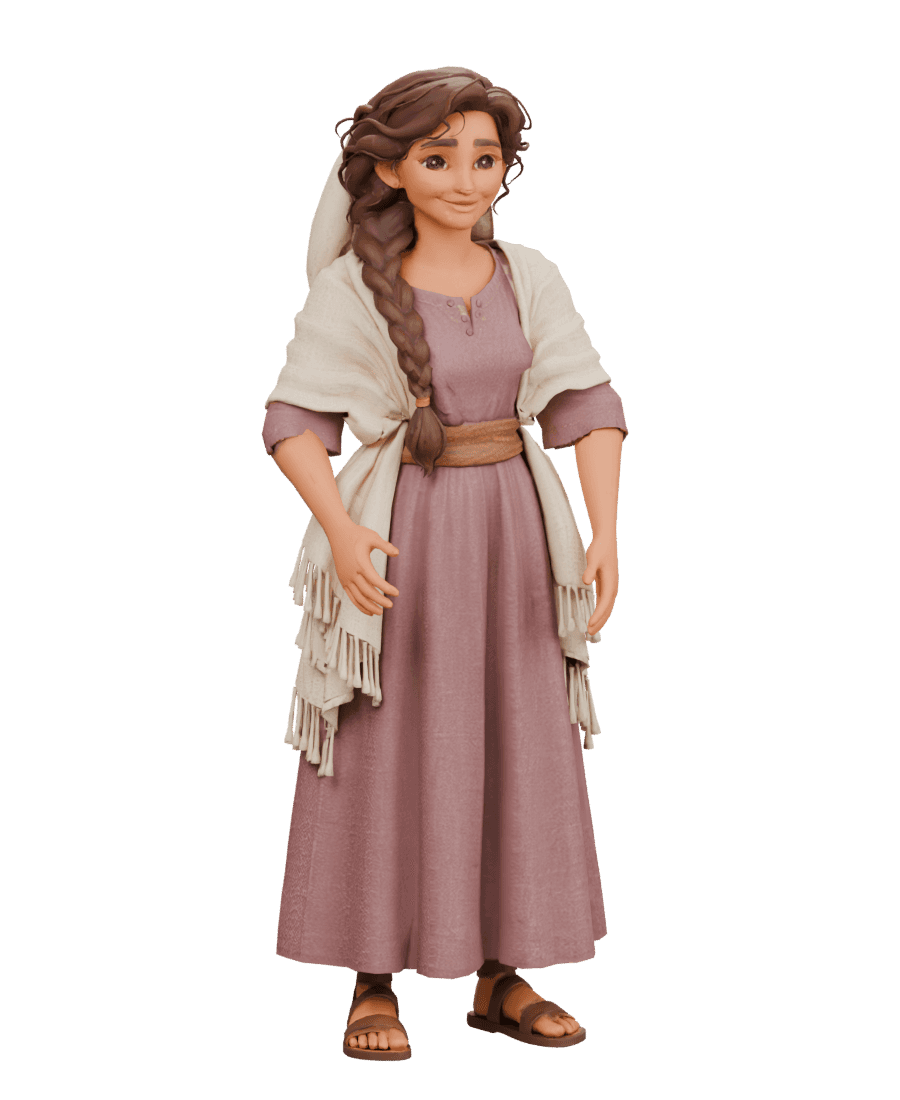
A closer look, from every angle
Load the actual project model to turn it, zoom in and compare its surface treatments. The 3D download starts when you choose to explore.
A person within the story
Japheth’s wife in Genesis 6–9: Biblical Role & Family Story
- Noah’s Ark
- Noah’s family
- Biblical naming
- Unnamed in Genesis (identified by family relation)
- Household companion
- Japheth
- Scripture references
- Genesis 6:18; 7:13; 8:16–18
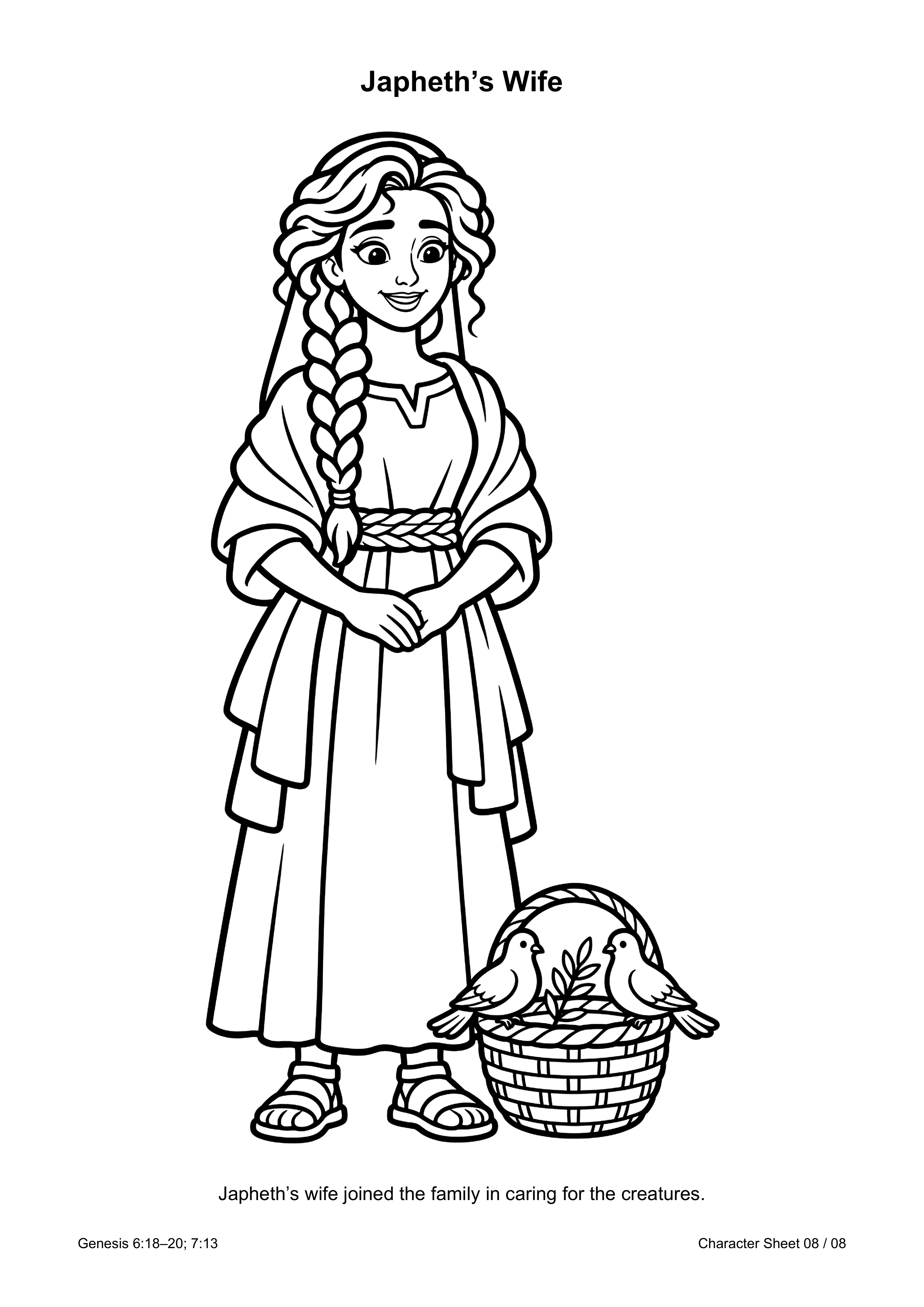
- Printable A4 coloring sheet
- Download Japheth’s wife A4 coloring sheet (PNG)
Japheth’s wife belongs to the household named by relationship in the flood account. Genesis includes the three sons’ wives when the family enters the Ark and again when the household leaves. It does not provide her personal name or an independent account of her life before the journey.
Her presence therefore connects the story’s great events with the human scale of a family travelling together. The source leaves many everyday experiences unstated, giving an adaptation room for thoughtful characterization without turning invention into history. Her visual identity and proposed performance are developed within that distinction, keeping her relationship to the biblical account clear.
Bringing a person into a playable world
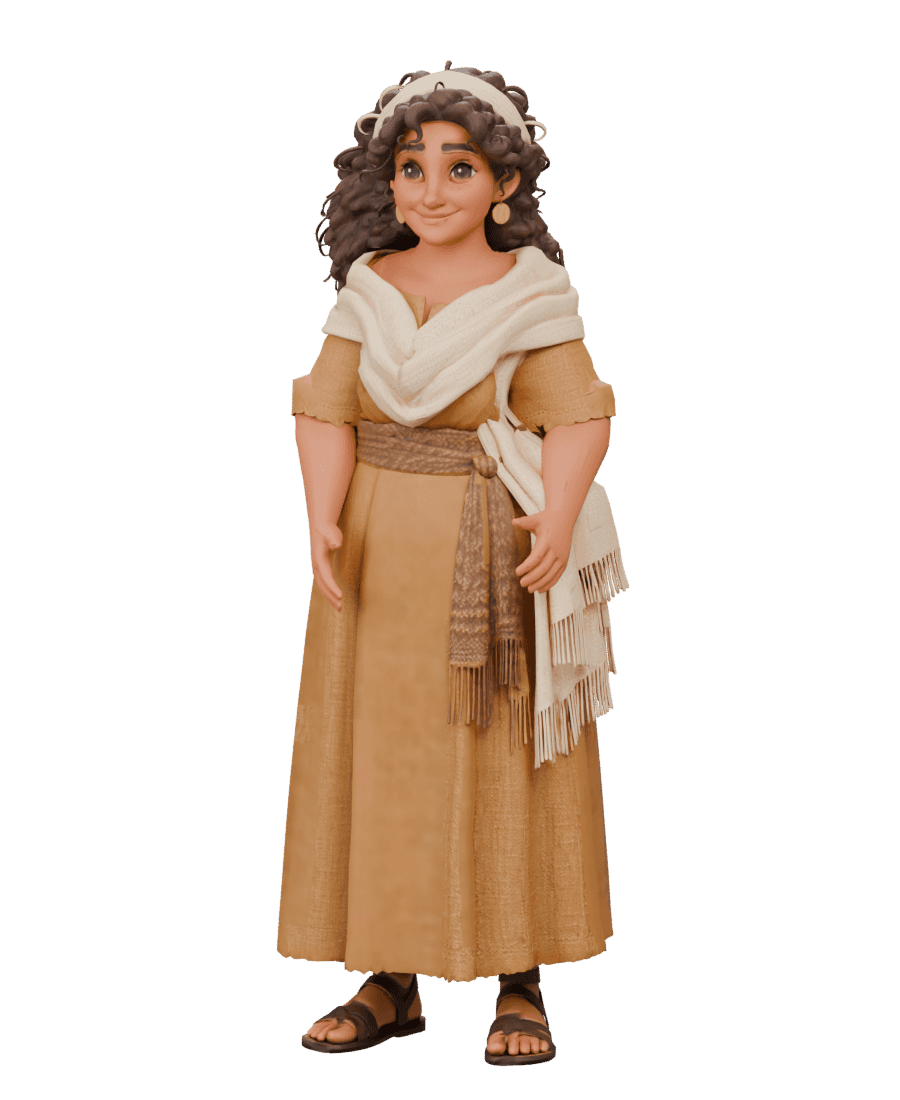
Our interpretation explores a warm, responsive presence for Japheth’s wife. She is designed to remain identifiable within the ensemble, with her own expression and outline, rather than serving as a background variation of another character’s portrait.
The relationship between her pose and Japheth’s is one part of the group’s composition, while differences in proportion and garment rhythm preserve individuality. Warmth is a creative performance direction for the game. The profile avoids assigning a personal name or life history that Genesis does not record.
The source account and our creative interpretation are presented separately. Design choices help tell the story; they do not add facts to Scripture.
The family around the character
Other Noah’s Ark Family Characters in Genesis 6–9
All Noah characters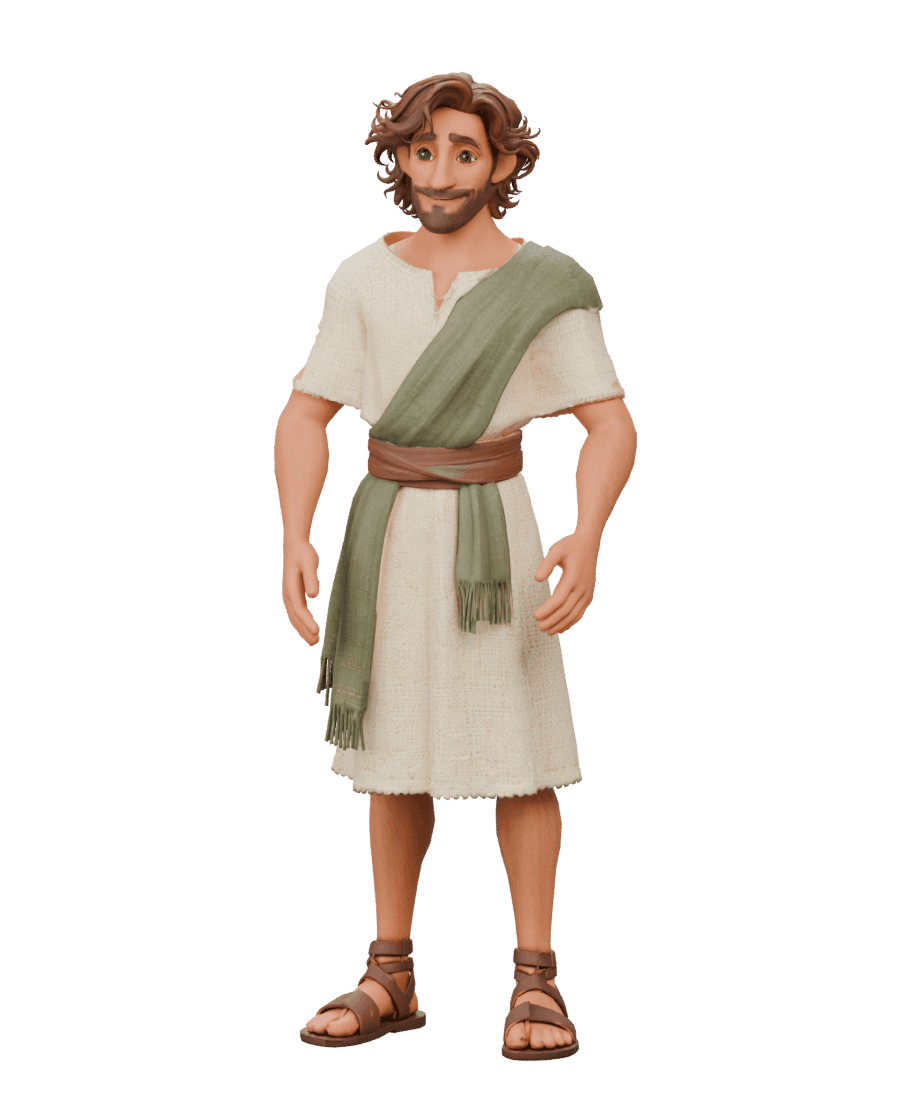
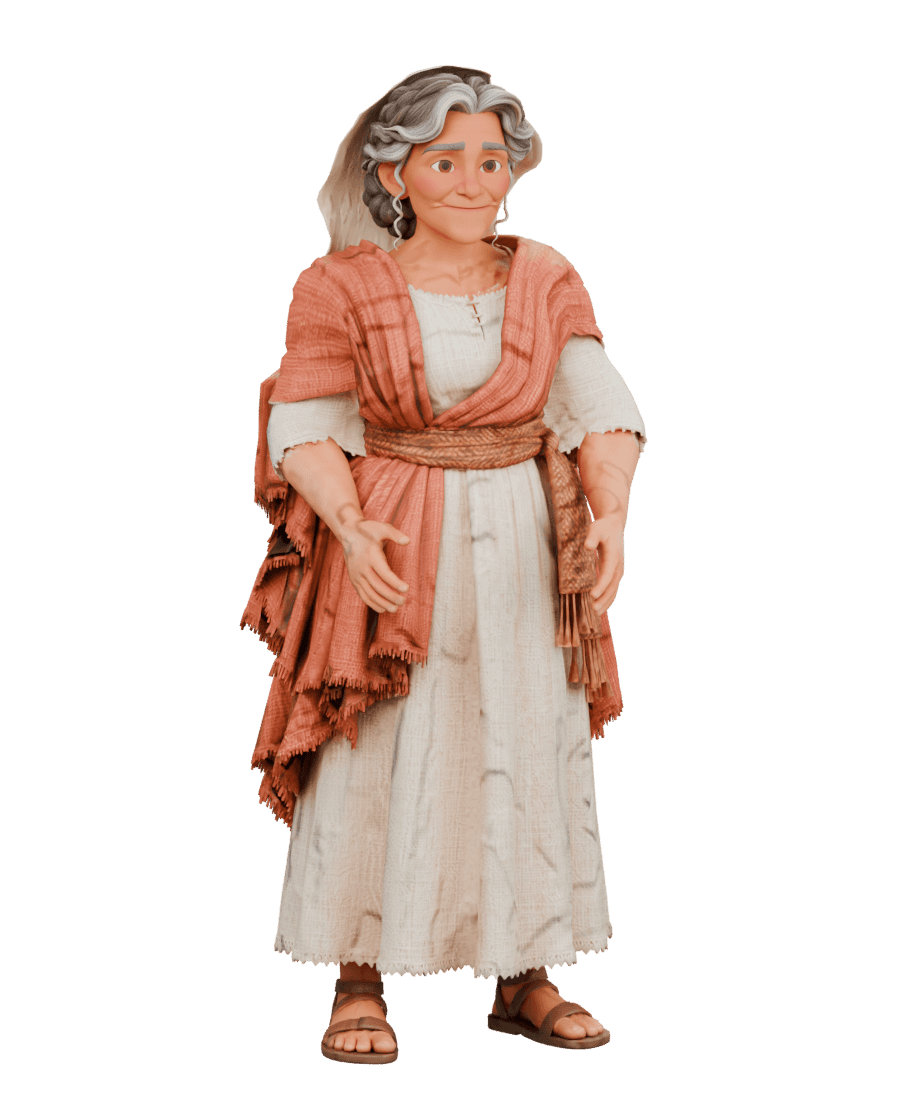
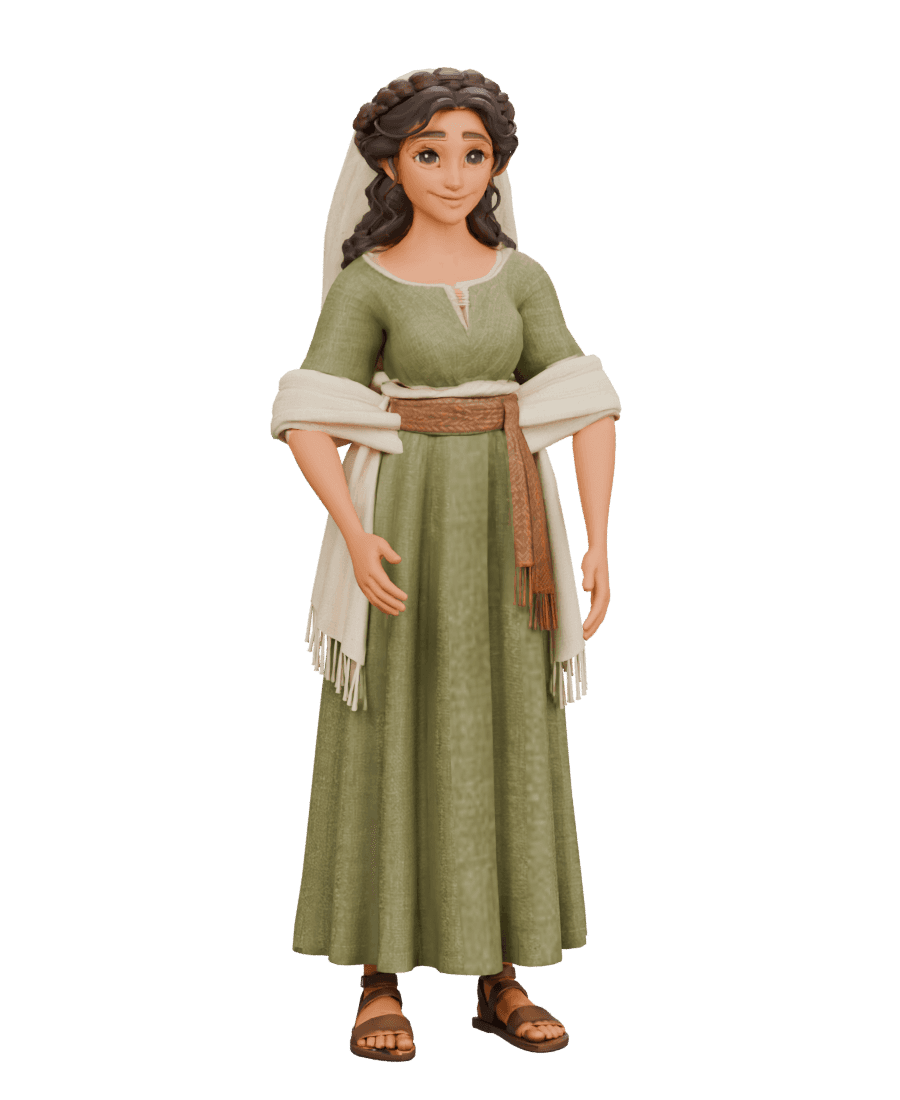
From an idea to a game character
3D Bible Character Design & Modeling
Follow the decisions behind the silhouette, surfaces and structure. Explore newly rendered studies of the actual project geometry, then inspect the current model from your own angle.
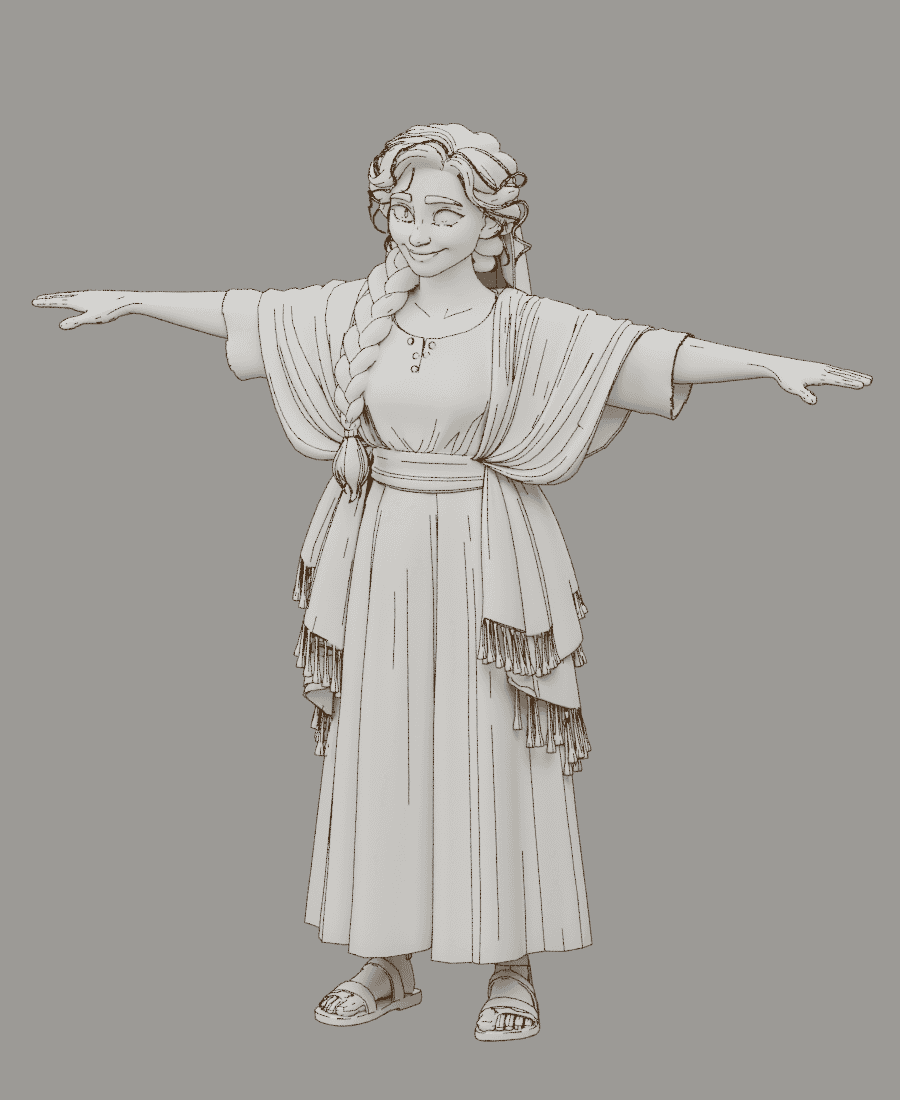
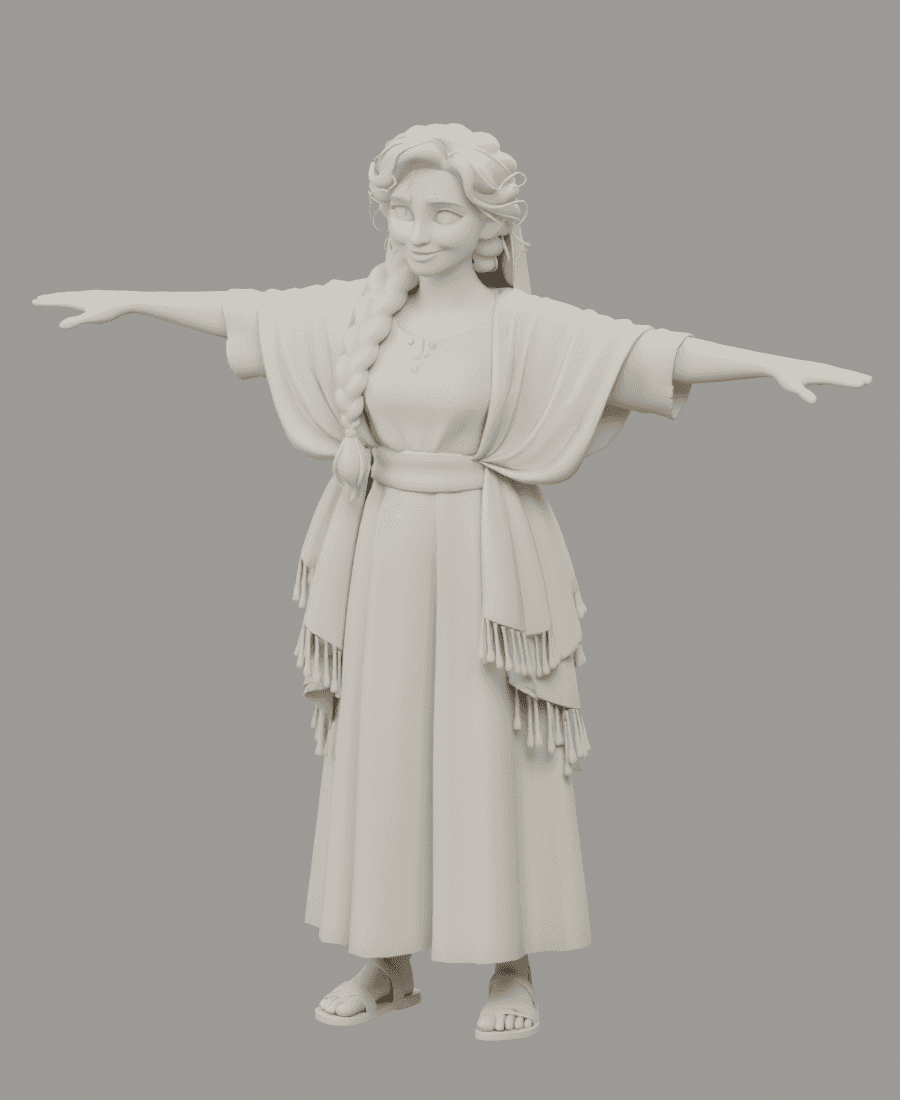
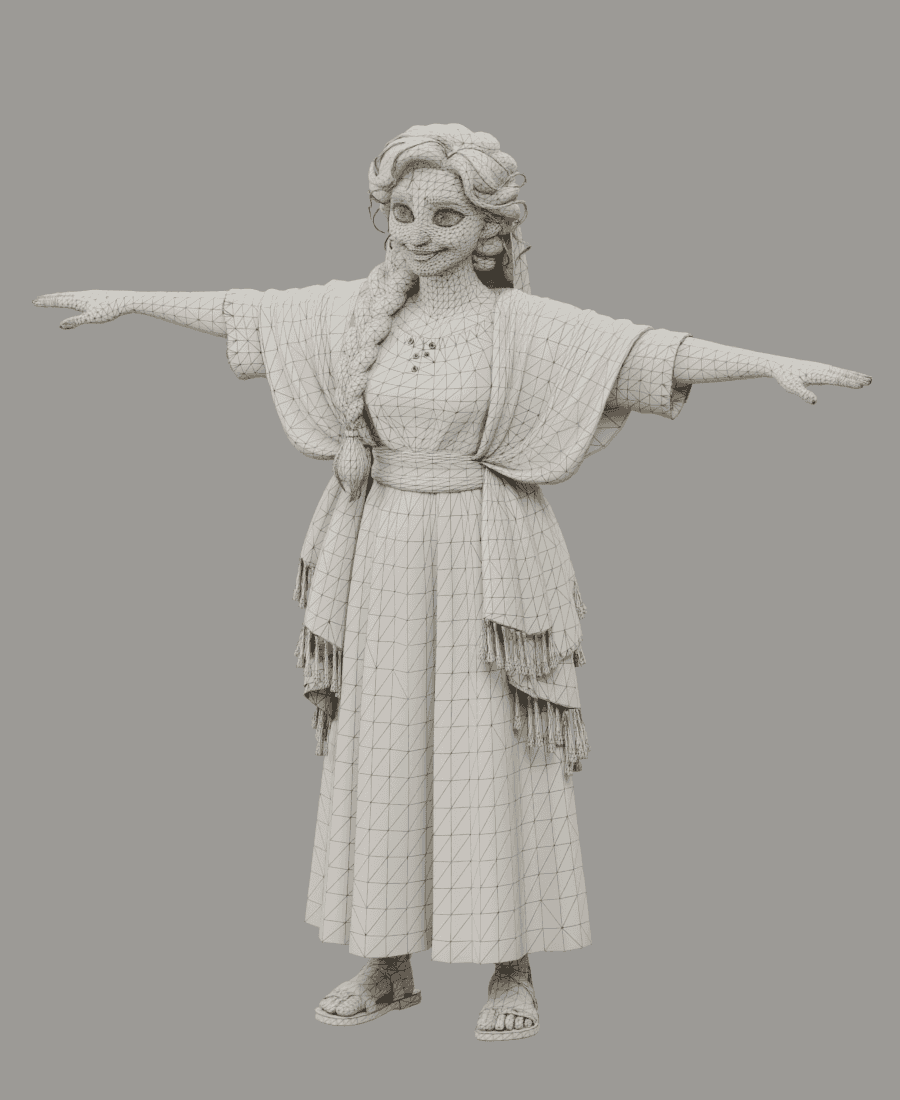
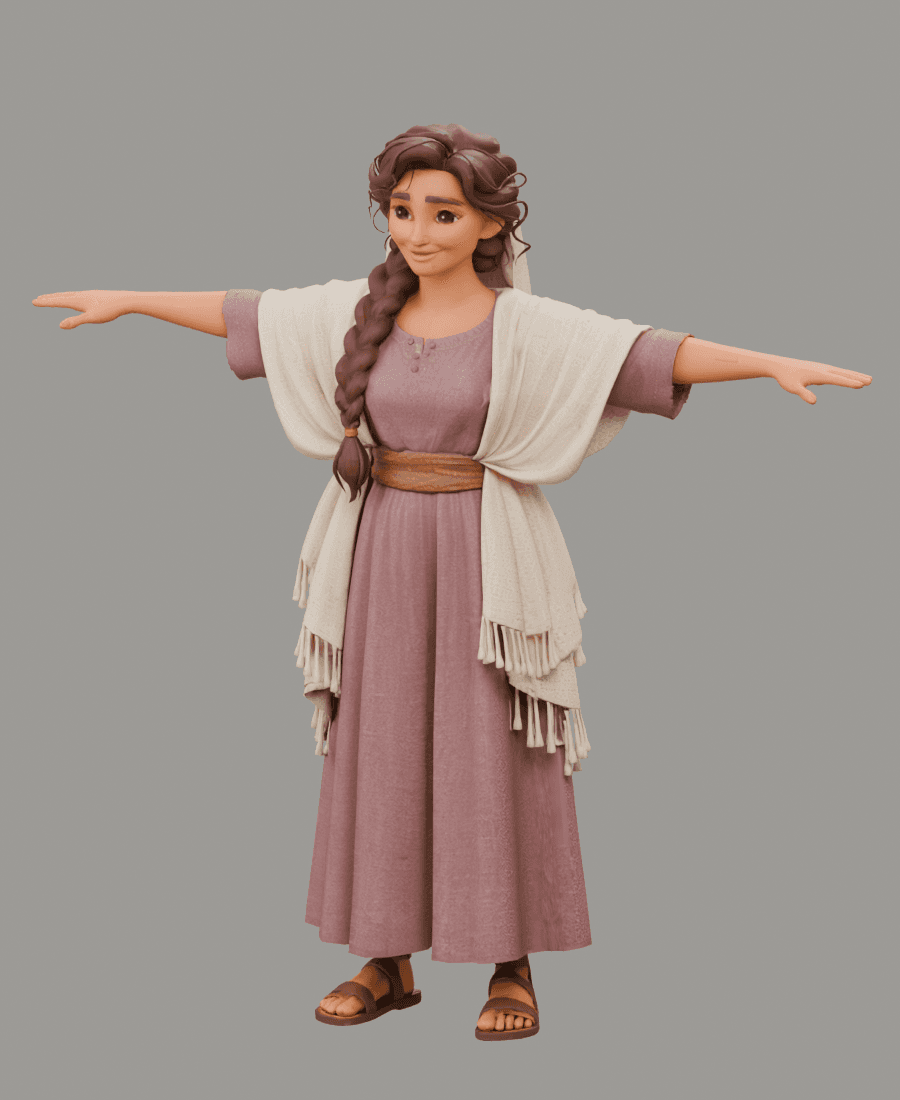
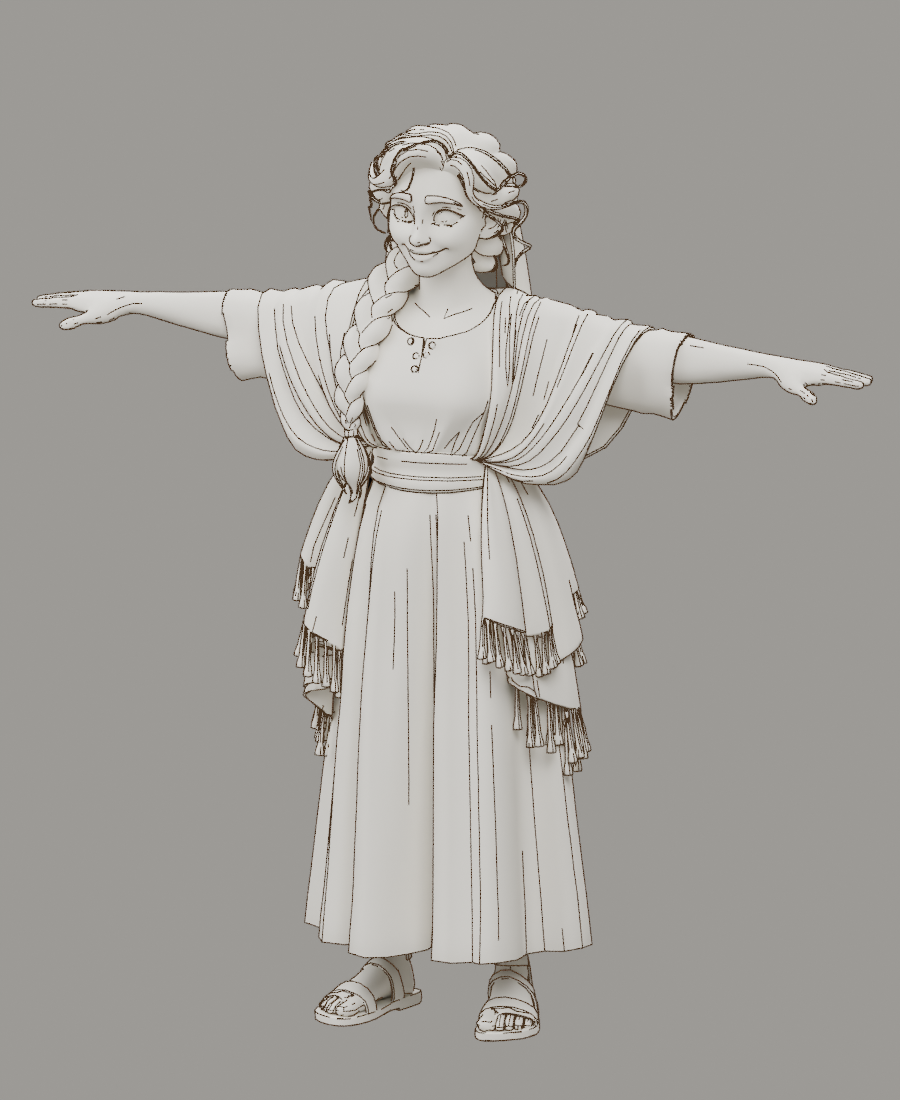
These line, clay and mesh studies are new visualizations of the project model. They explain its construction; they are not historical sketches or captures of the original production stages.
A character with a purpose
Give the character an individual expression and a gentle but readable silhouette. Her form should complement Japheth’s without copying it, adding another recognizable presence to the family’s shared visual story.
Character concept
A character begins with a clear visual question: what should the player understand at a glance? Line studies isolate gesture, proportion and silhouette, making the design readable before lighting or surface detail carries the image. The supplied production assets began with reference art and generated base meshes, followed by Blender fitting and surface repairs.
The line study focuses on the flow from head to shoulders and garments, giving her a clear outline within the full family composition.
Form and volume
The clay view removes colour and texture to reveal the shape underneath. Faces, folds and broad proportions can be examined together, showing how large forms support smaller details without depending on the finished material treatment.
Clay rendering separates facial expression and broad fabric forms from colour, making the balance of the character easier to study.
Mesh and topology
The mesh view exposes the geometry that holds the visible surface together. It gives a practical way to inspect the distribution of shapes around the face, garments and limbs; a mesh view alone does not certify animation readiness.
The mesh study lets you inspect the actual structure behind her outline, including facial shapes and the transitions between layered surfaces.
Materials and surfaces
Colour, texture and the response to light turn a modelled form into a recognizable presence. The shaded view lets you inspect the actual supplied surfaces, while the clay view makes it easier to separate material effects from geometry.
The supplied textures give her recognizable colour and surface detail; compare the finished and clay views to see how each contributes.
Movement and game design
The textured and clay views show a gentle idle animation. The mesh view shows the same resting pose.
Her proposed movement language is warm and responsive, using attentive posture and clear reactions as adaptation choices rather than unrecorded biblical facts.
- Triangles
- 53,692
- Vertices
- 57,735
- Model size
- 6.6 MB