
Inside the character studio
Noah’s family
Noah’s wife in the Bible: Noah’s Ark Story, 3D Model & Coloring Sheet
A household presence within a story of endurance and renewal.
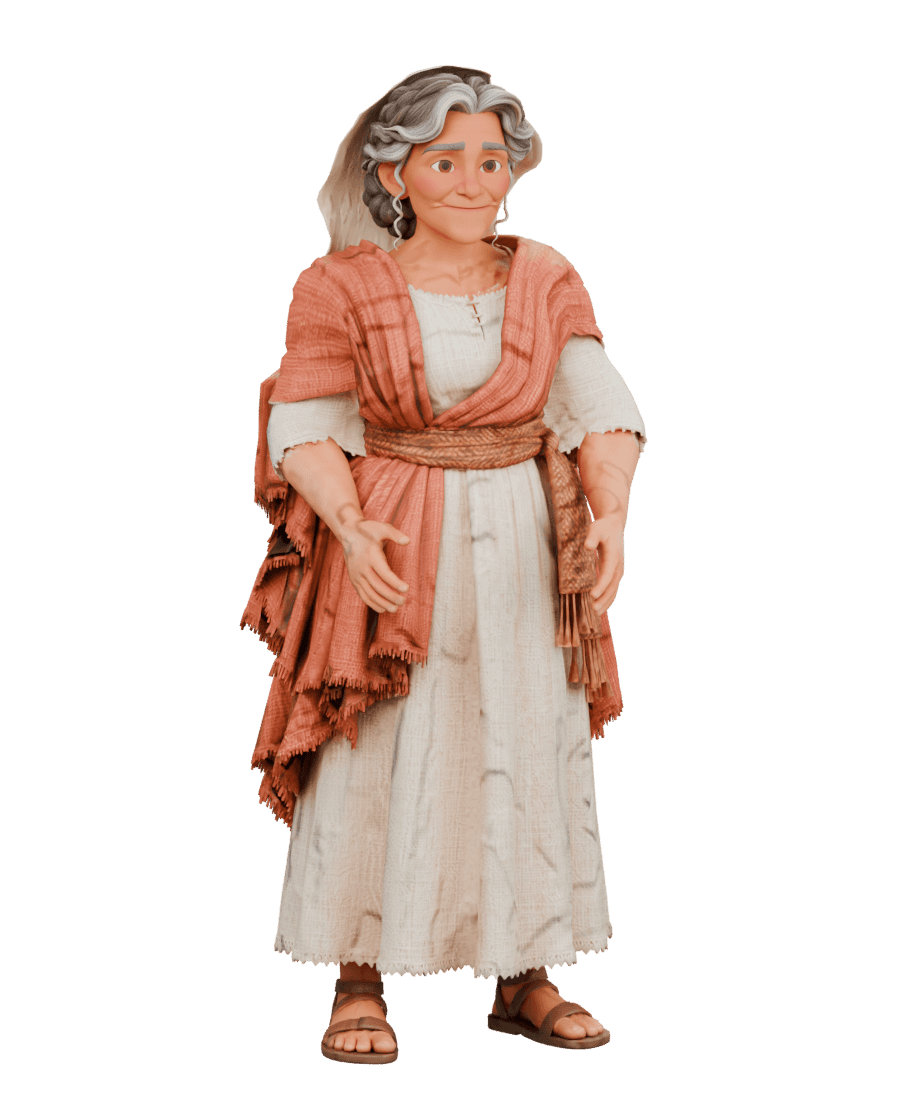
A closer look, from every angle
Load the actual project model to turn it, zoom in and compare its surface treatments. The 3D download starts when you choose to explore.
A person within the story
Noah’s wife in Genesis 6–9: Biblical Role & Family Story
- Noah’s Ark
- Noah’s family
- Biblical naming
- Unnamed in Genesis (identified by family relation)
- Household companion
- Noah
- Scripture references
- Genesis 6:18; 7:7, 13; 8:16–18
- Printable A4 coloring sheet
- Download Noah’s wife A4 coloring sheet (PNG)
Noah’s wife is included in the household that enters the Ark and survives the flood. Genesis identifies her through that relationship and records her presence with Noah, their sons and their sons’ wives. It does not give her name or a separate account of her earlier life.
She appears again among those who leave the Ark when the family steps into the world after the waters recede. Her place in the story belongs to the whole household’s passage through danger and change. The character’s appearance, temperament and daily activities in an adaptation therefore require clear separation from the limited source details.
Bringing a person into a playable world
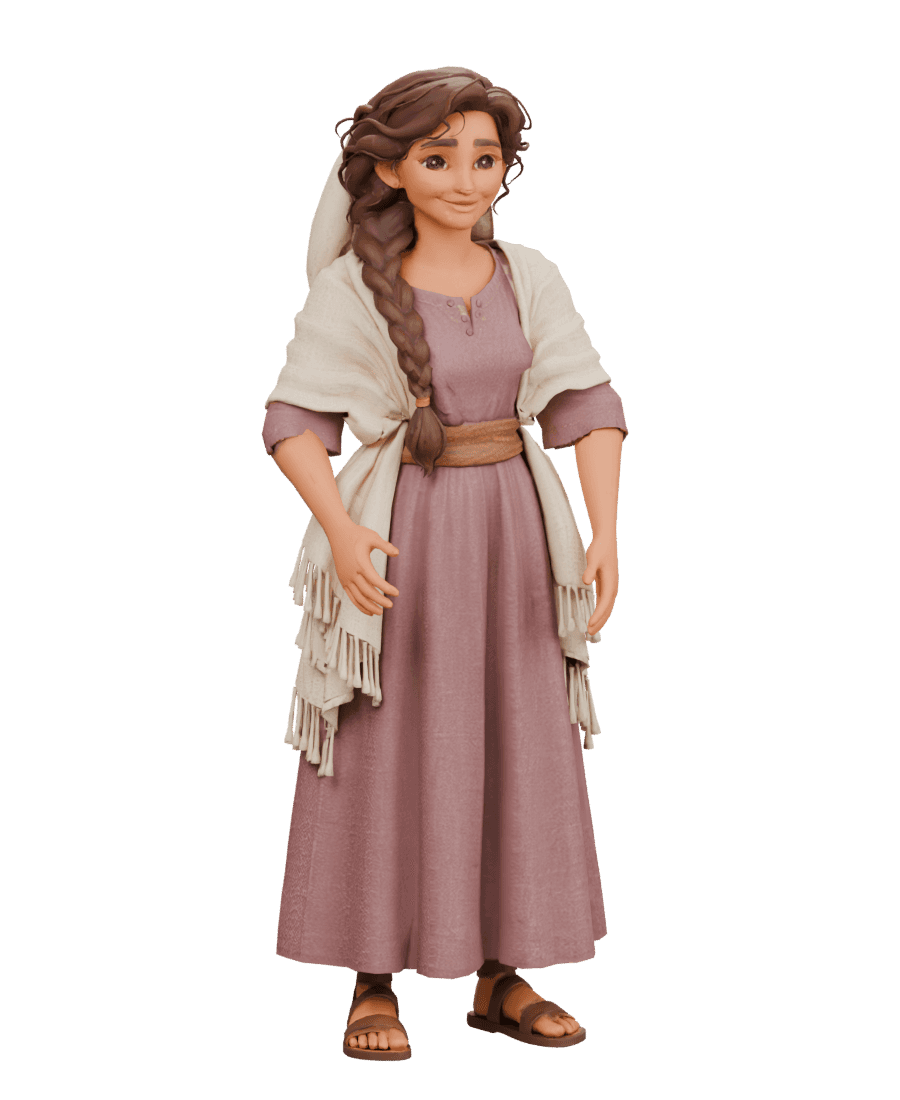
Our creative interpretation gives Noah’s wife a distinct, composed presence within the family group. The aim is to suggest someone sharing the uncertainty and responsibility of the journey, rather than treating her as an unnamed background duplicate of another character.
A clear head-and-shoulders shape and an open, readable pose support that intention. Her visual personality is an adaptation choice; we retain the biblical description “Noah’s wife” instead of presenting a later traditional name as if Genesis supplied it.
The source account and our creative interpretation are presented separately. Design choices help tell the story; they do not add facts to Scripture.
The family around the character
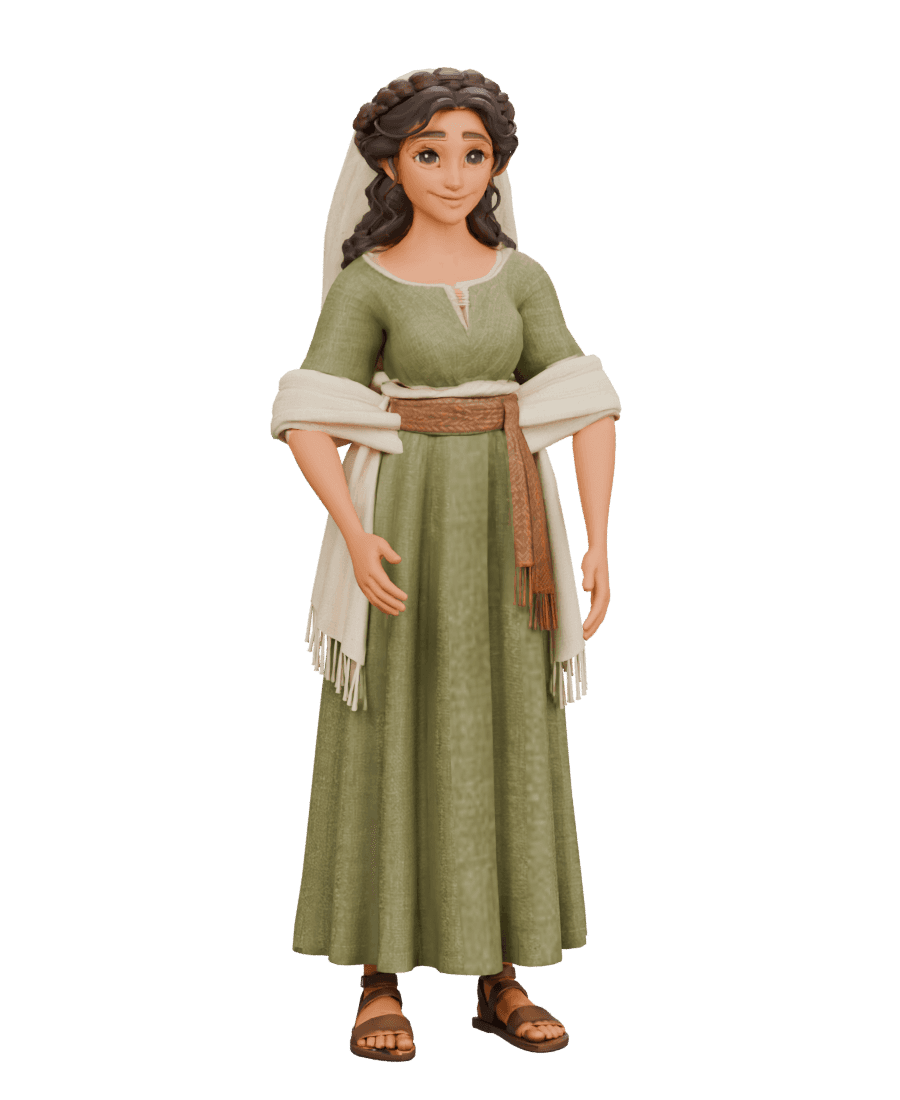
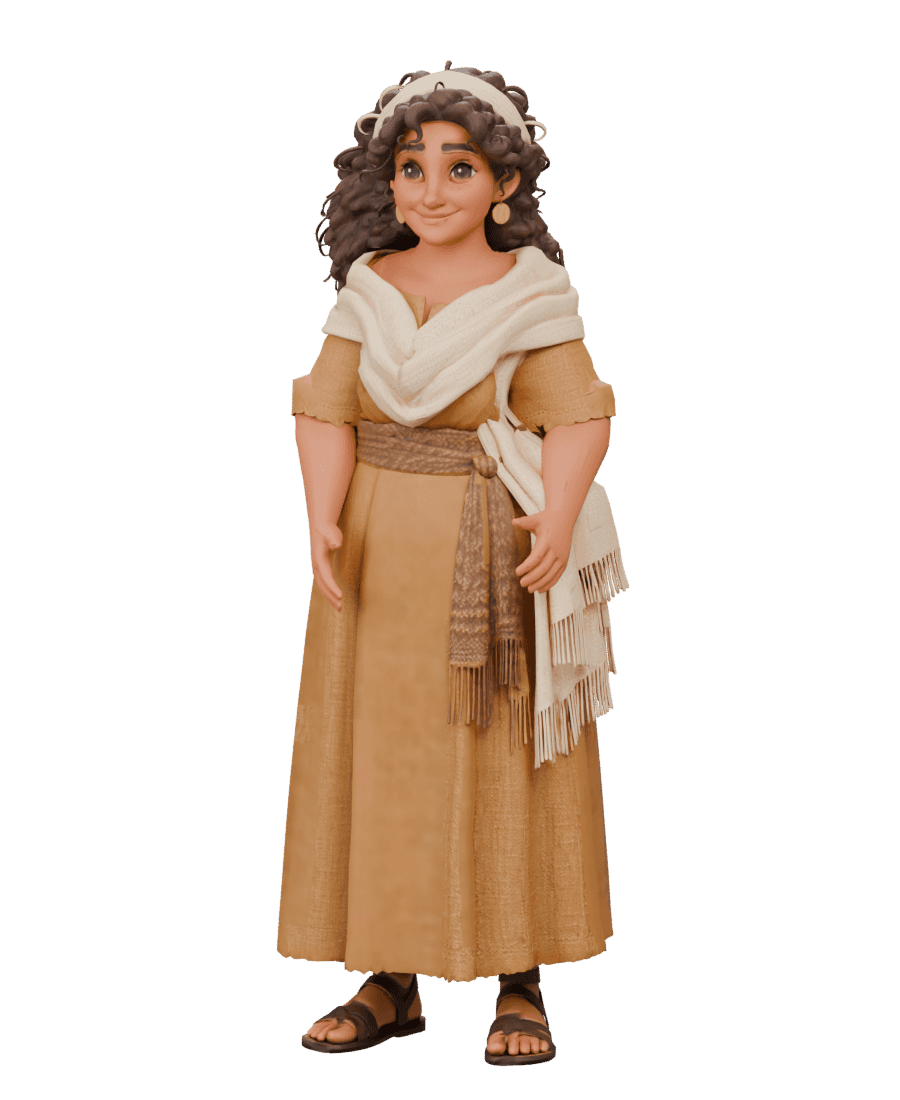
Other Noah’s Ark Family Characters in Genesis 6–9
All Noah characters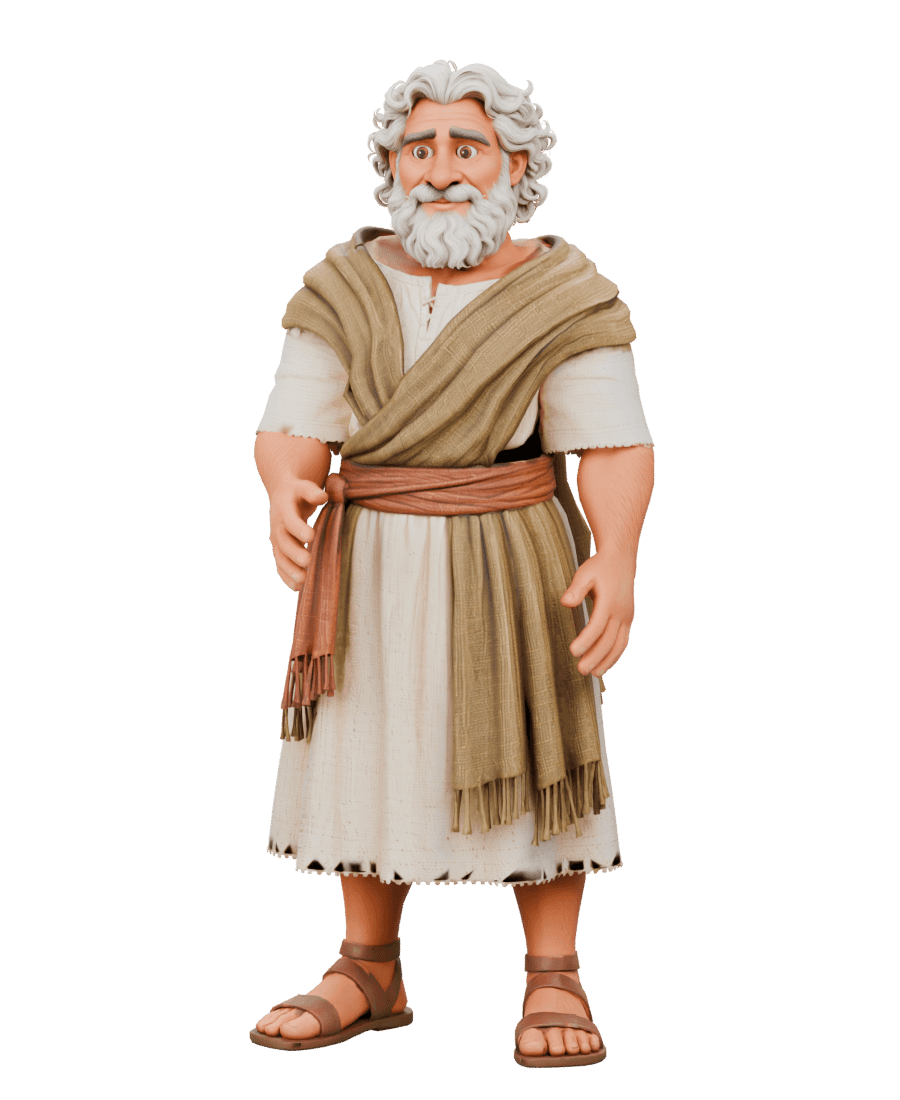
From an idea to a game character
3D Bible Character Design & Modeling
Follow the decisions behind the silhouette, surfaces and structure. Explore newly rendered studies of the actual project geometry, then inspect the current model from your own angle.
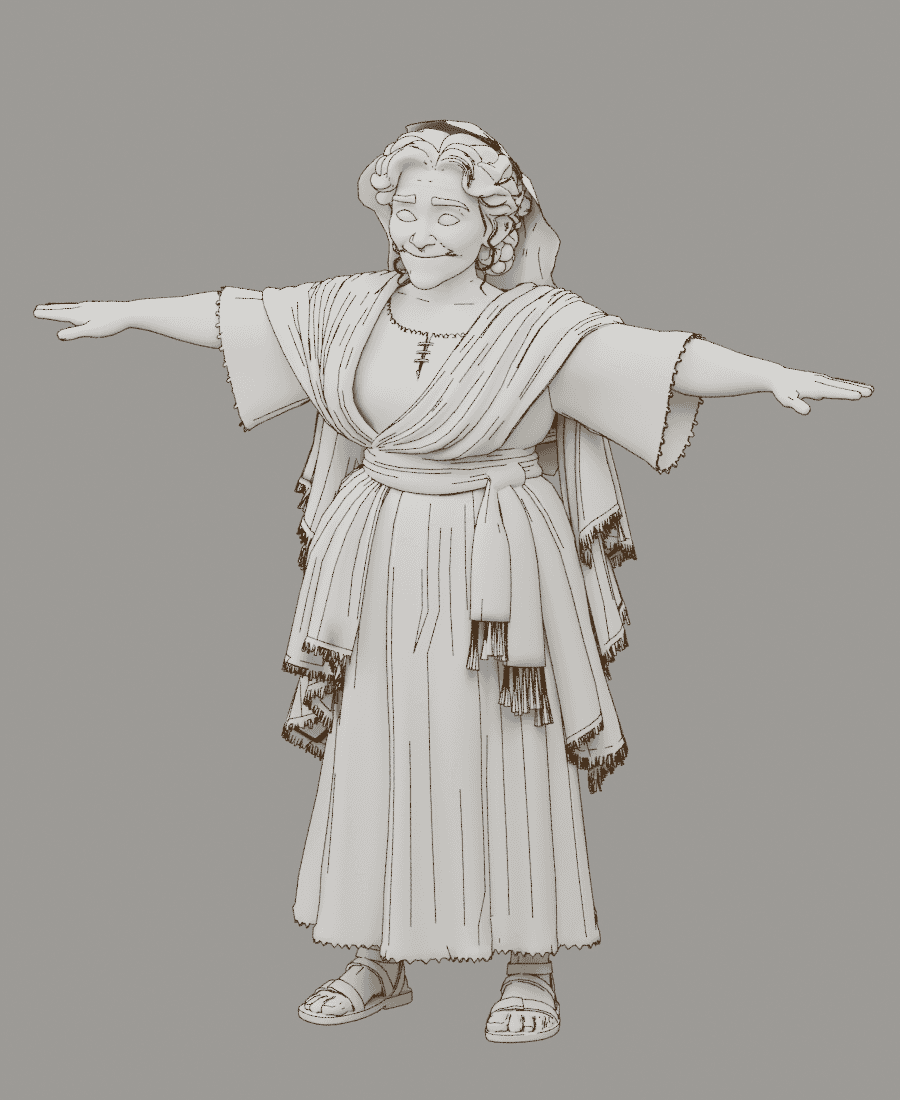
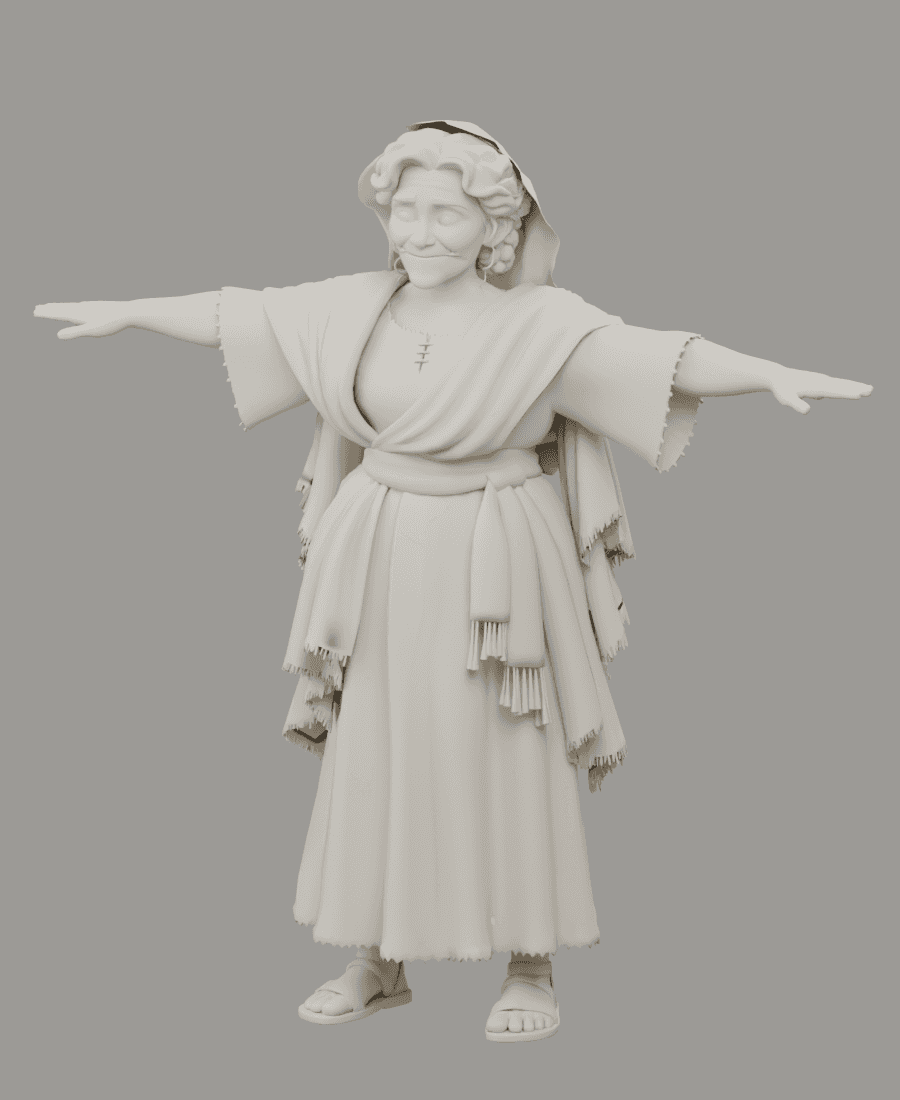
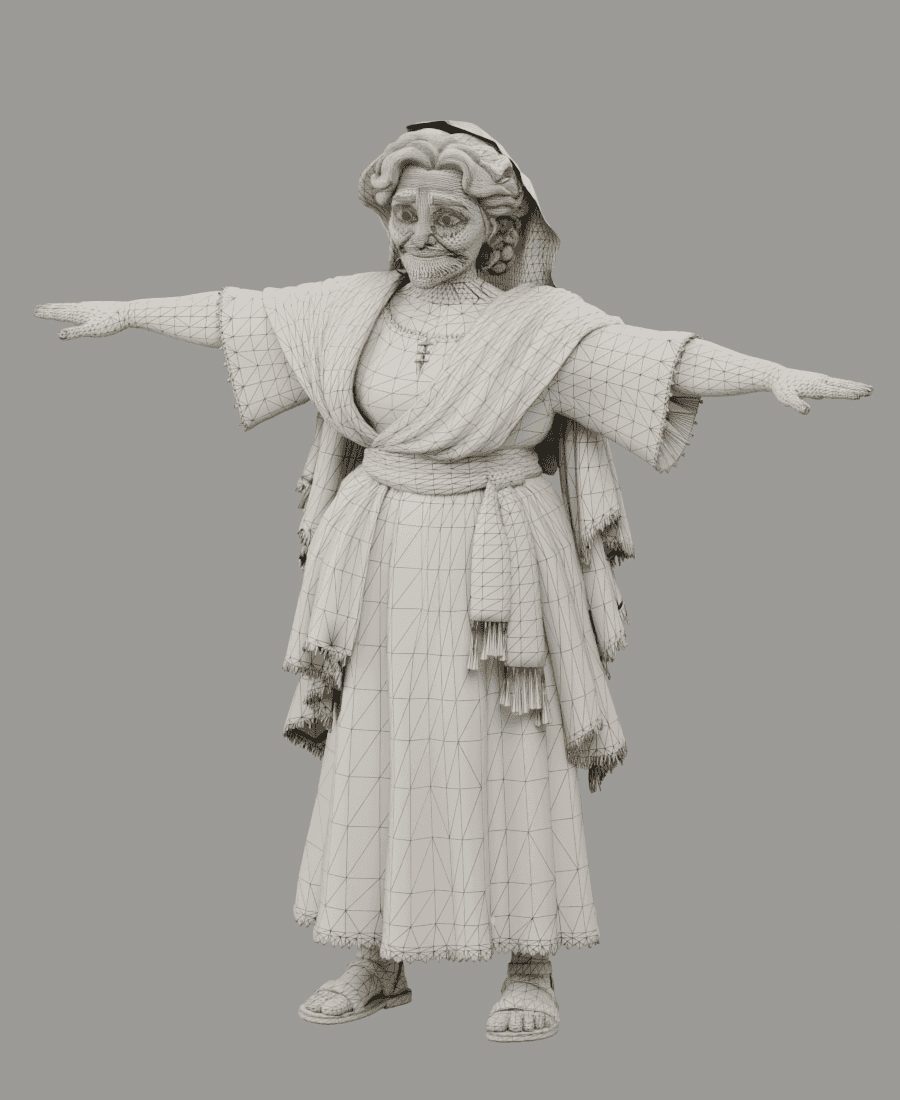
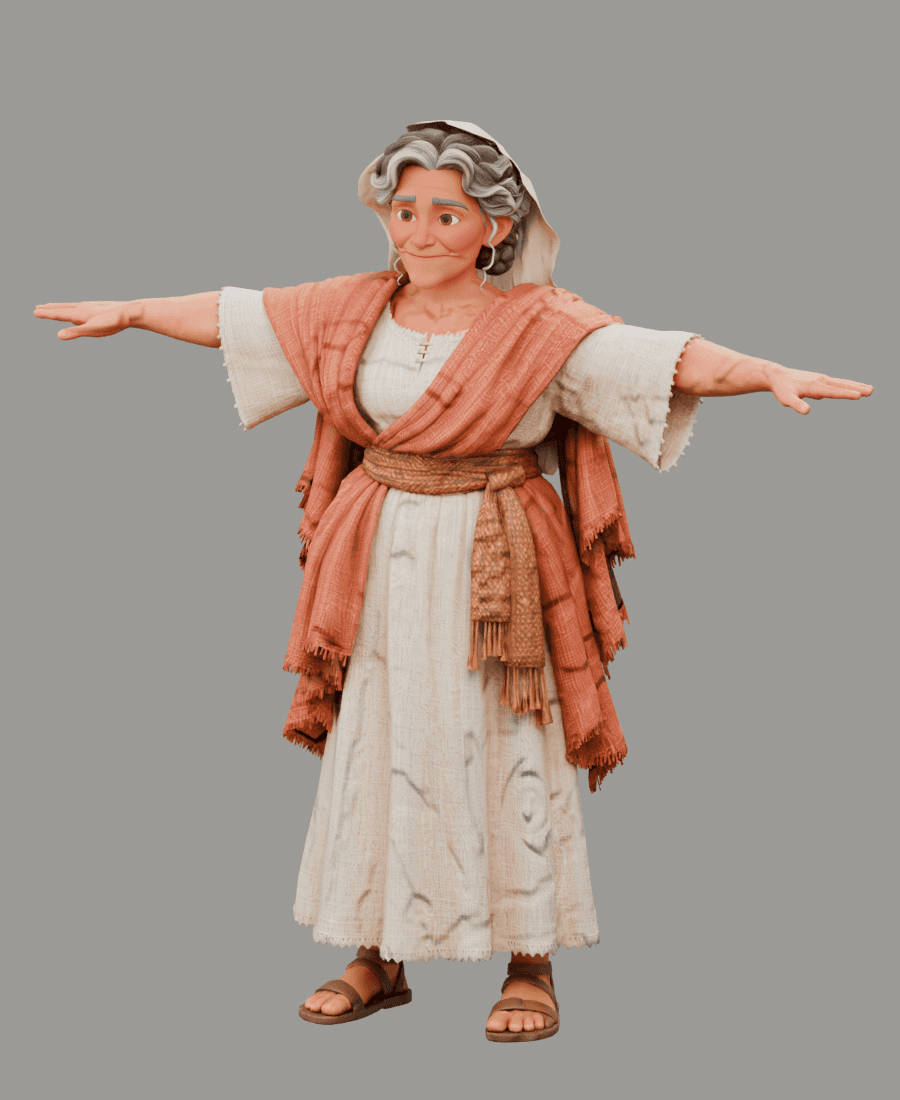
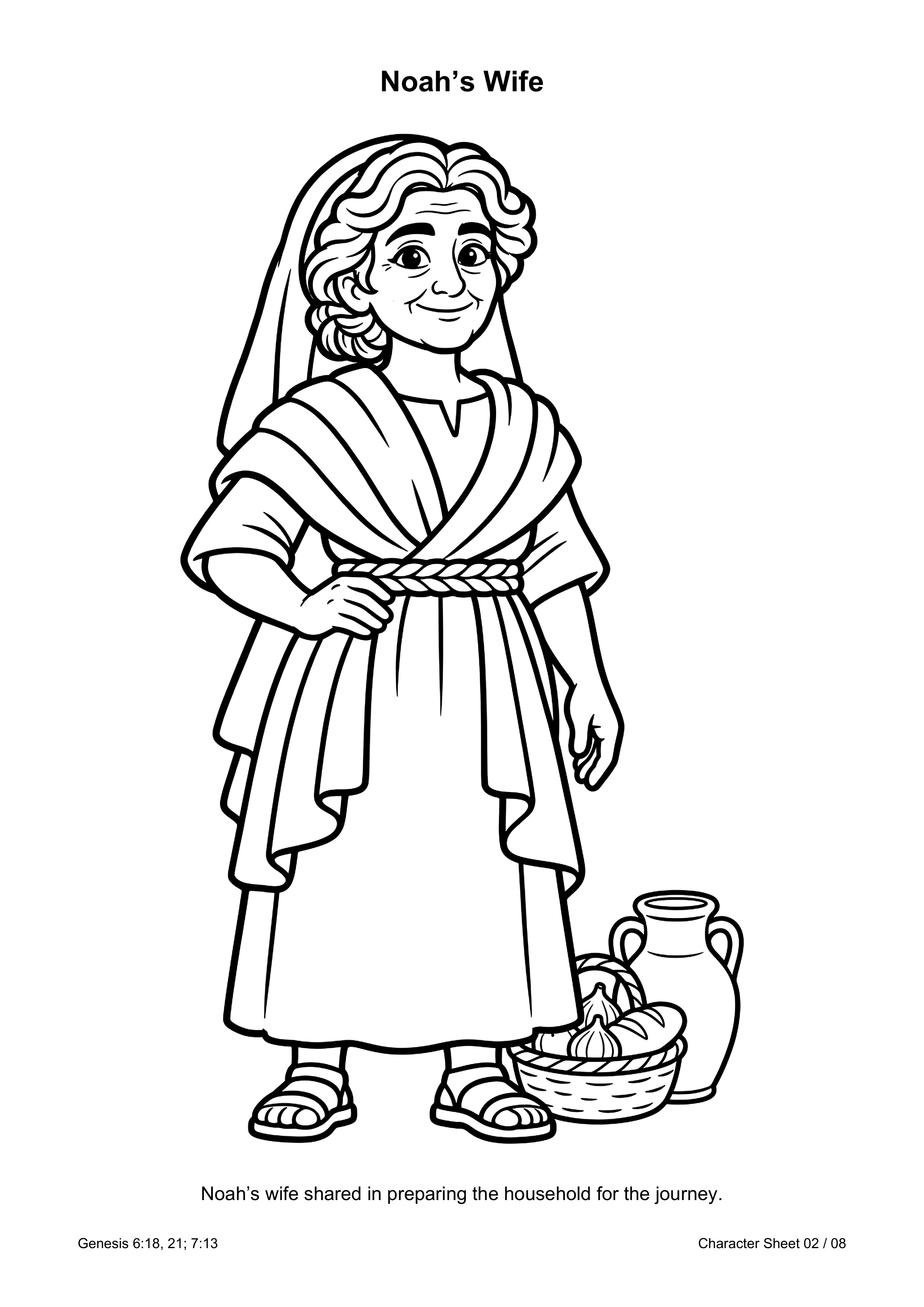
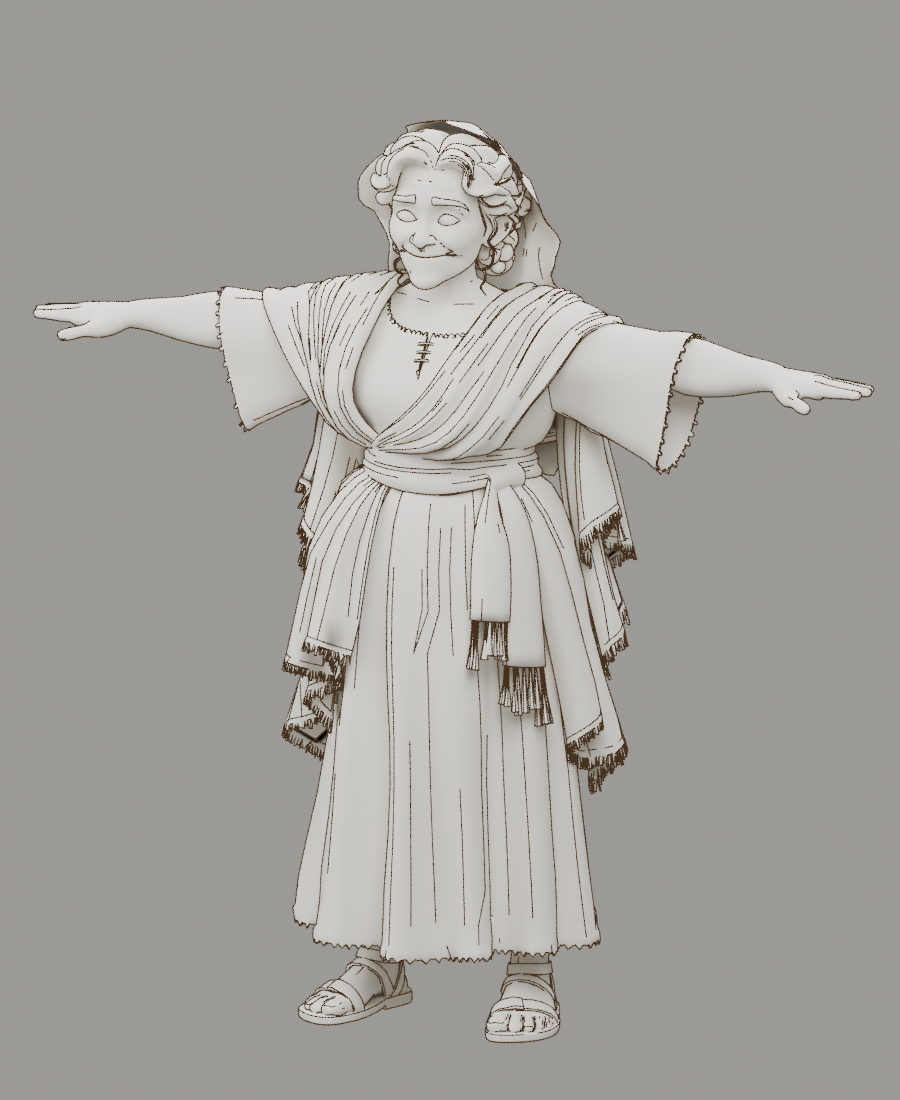
These line, clay and mesh studies are new visualizations of the project model. They explain its construction; they are not historical sketches or captures of the original production stages.
A character with a purpose
Give her an individual presence through proportion, expression and garment rhythm. The design should complement Noah while remaining identifiable on its own, with dignity conveyed through the whole figure.
Character concept
A character begins with a clear visual question: what should the player understand at a glance? Line studies isolate gesture, proportion and silhouette, making the design readable before lighting or surface detail carries the image. The supplied production assets began with reference art and generated base meshes, followed by Blender fitting and surface repairs.
Study the relationship between her face, head covering and shoulders, looking for a distinctive outline within the wider family group.
Form and volume
The clay view removes colour and texture to reveal the shape underneath. Faces, folds and broad proportions can be examined together, showing how large forms support smaller details without depending on the finished material treatment.
The clay treatment separates the volume of the garments from their surface decoration, showing how the figure holds its shape.
Mesh and topology
The mesh view exposes the geometry that holds the visible surface together. It gives a practical way to inspect the distribution of shapes around the face, garments and limbs; a mesh view alone does not certify animation readiness.
The mesh study reveals the supplied structure around the face and clothing transitions, making subtle changes of form easier to inspect.
Materials and surfaces
Colour, texture and the response to light turn a modelled form into a recognizable presence. The shaded view lets you inspect the actual supplied surfaces, while the clay view makes it easier to separate material effects from geometry.
Surface colours and garment details give her a separate visual identity; compare them with the clay study to understand that contribution.
Movement and game design
The textured and clay views show a gentle idle animation. The mesh view shows the same resting pose.
Her intended performance emphasizes attentive posture and clear gestures, creating a composed family presence without inventing a scripted biblical conversation.
- Triangles
- 87,548
- Vertices
- 61,077
- Model size
- 6.6 MB