
Inside the character studio
Noah’s son
Japheth in the Bible: Noah’s Ark Story, 3D Model & Coloring Sheet
A recognizable brother within the family’s changing world.
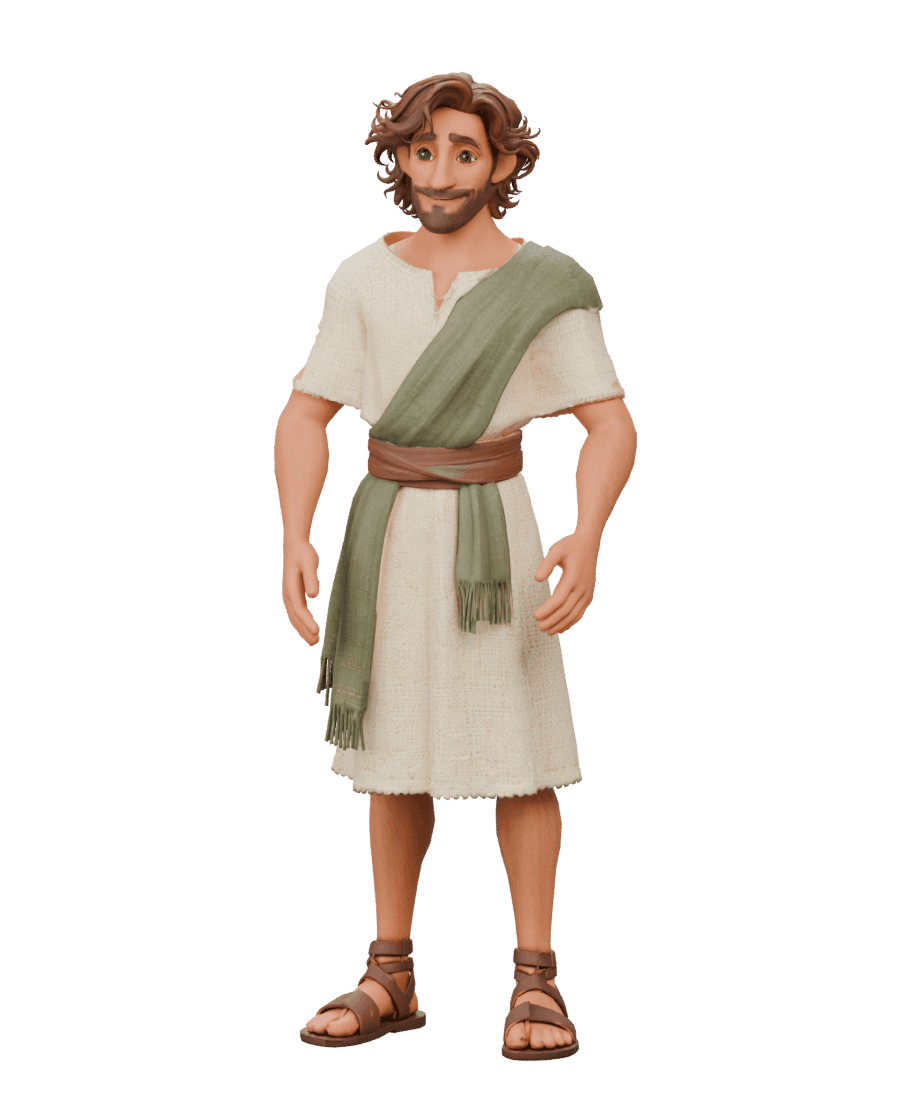
A closer look, from every angle
Load the actual project model to turn it, zoom in and compare its surface treatments. The 3D download starts when you choose to explore.
A person within the story
Japheth in Genesis 6–9: Biblical Role & Family Story
- Noah’s Ark
- Noah’s son
- Biblical naming
- Named in Genesis
- Household companion
- Japheth’s wife
- Scripture references
- Genesis 6:10, 18; 7:13; 8:16–18
- Printable A4 coloring sheet
- Download Japheth A4 coloring sheet (PNG)
Japheth is named as one of Noah’s three sons and is included in the family that enters the Ark. He shares the flood narrative with his wife, his brothers and their wives, and his parents. The source establishes those relationships without describing a complete individual adventure aboard.
When the family leaves the vessel, Japheth is part of the same transition from confinement and uncertainty toward life after the flood. A game adaptation needs to make that shared experience tangible through characters the player can recognize. His particular expression, movement style and everyday participation in the experience are therefore design choices grounded around the source account.
Bringing a person into a playable world
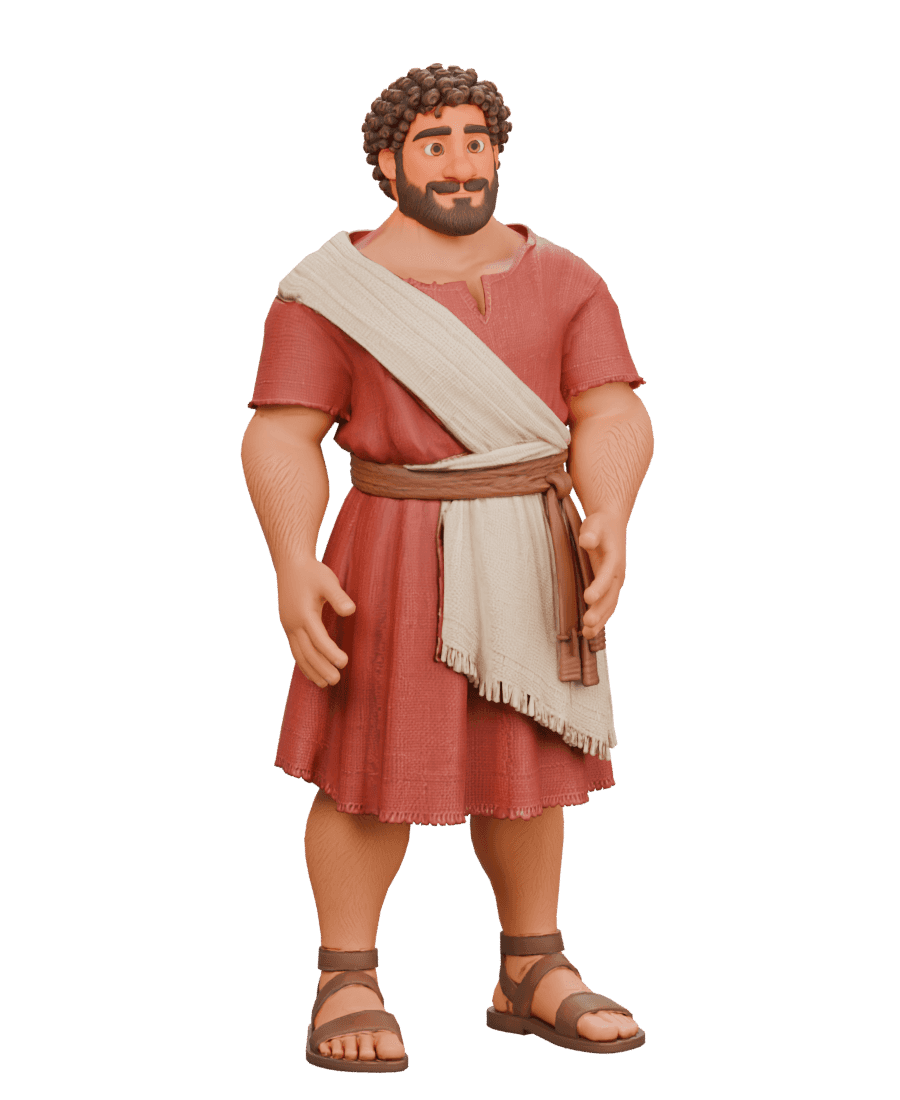
Our creative direction explores Japheth as an open, outward-looking presence within the group. The intention is to make the family feel varied and alive, with recognizable differences in pose and expression that a player can read without a written introduction.
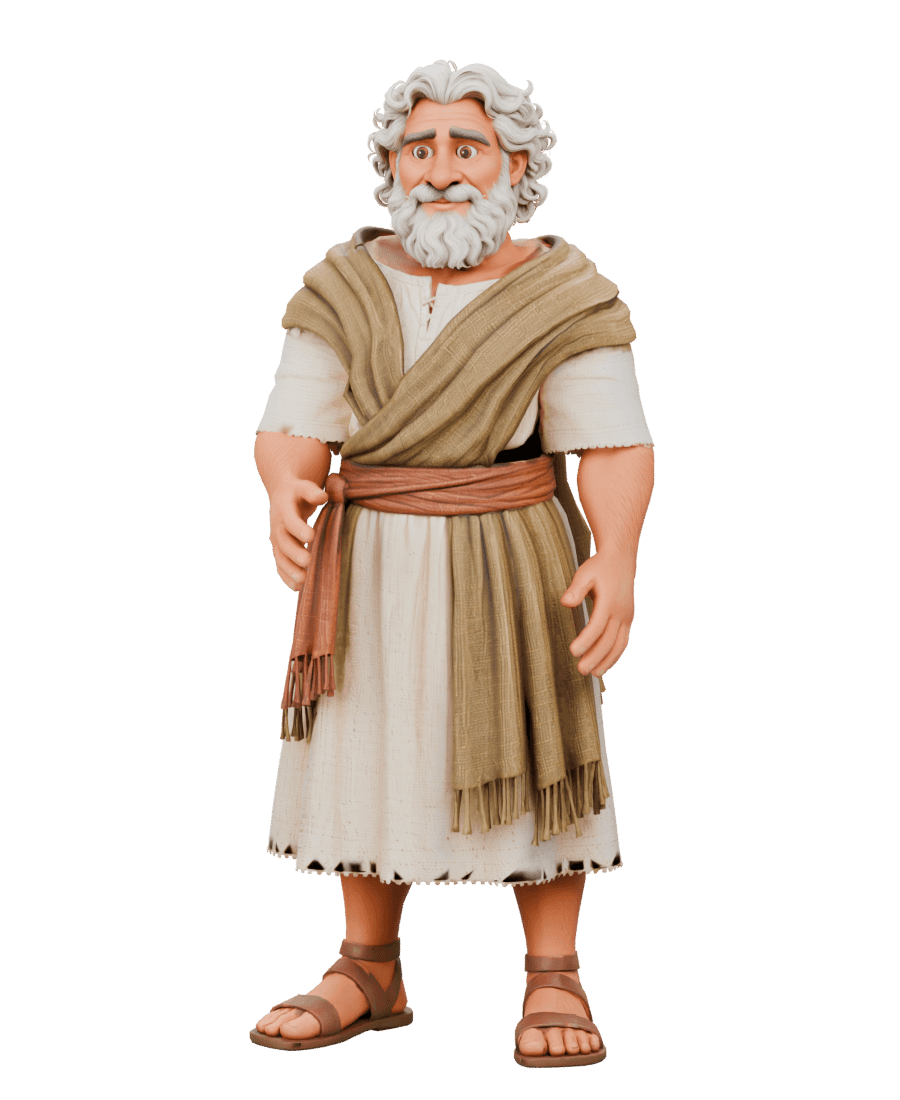
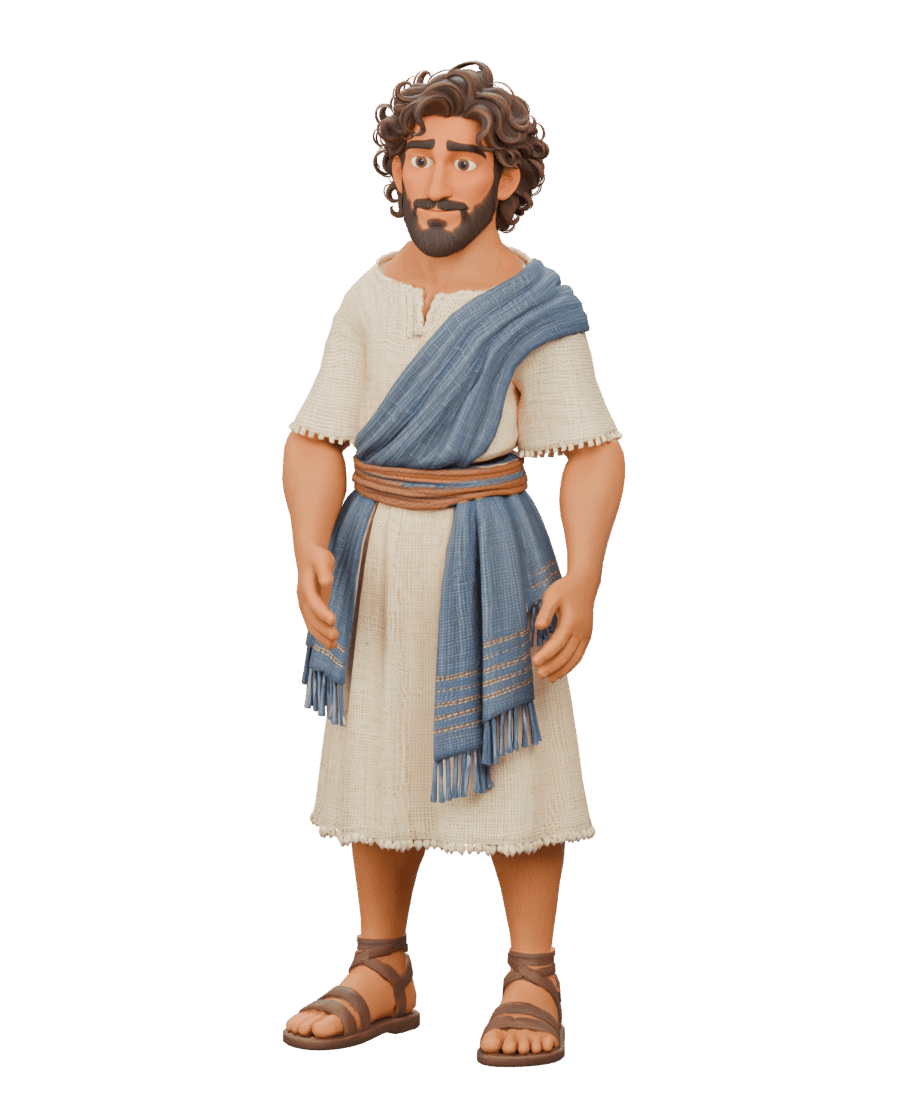
His design is compared with Noah, Shem and Ham to balance family resemblance with a clear individual profile. Curiosity and an open posture are proposed performance choices for this adaptation. They are not presented as details about his inner life supplied by the biblical passage.
The source account and our creative interpretation are presented separately. Design choices help tell the story; they do not add facts to Scripture.
The family around the character
Other Noah’s Ark Family Characters in Genesis 6–9
All Noah characters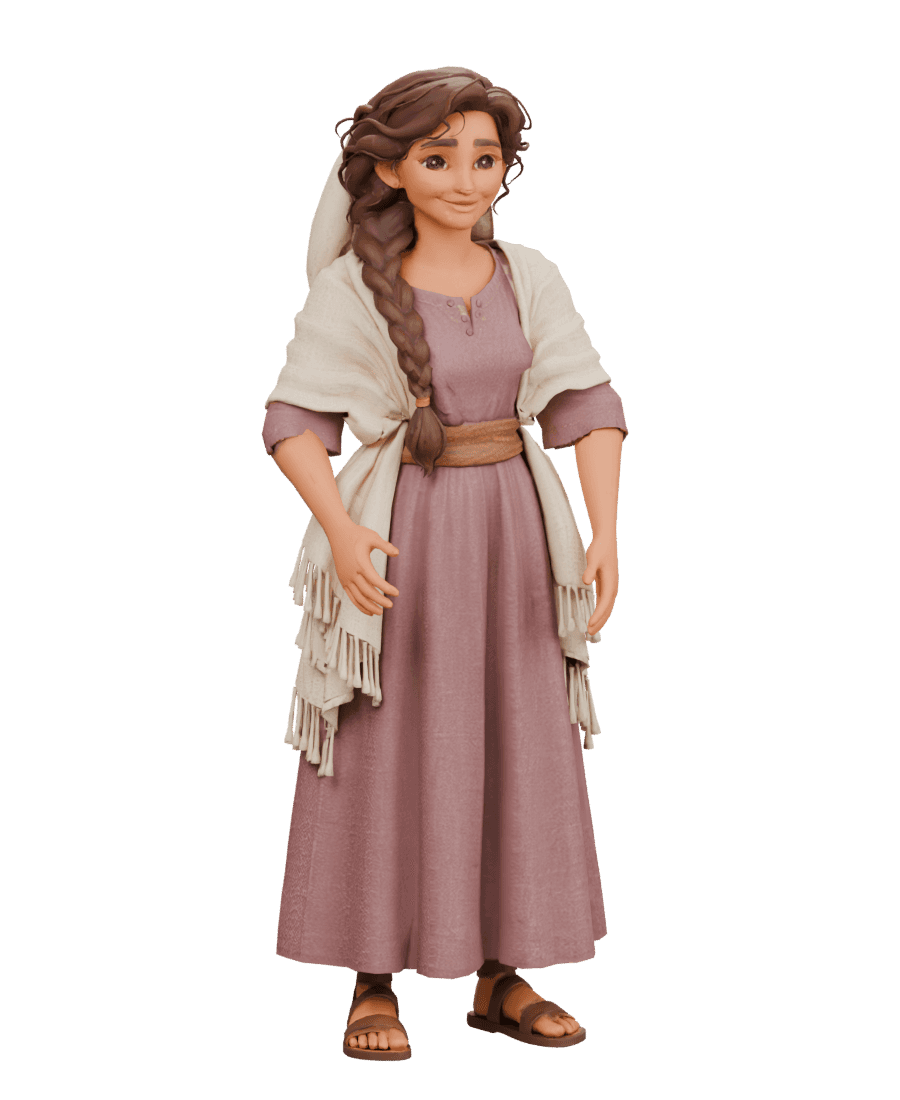
From an idea to a game character
3D Bible Character Design & Modeling
Follow the decisions behind the silhouette, surfaces and structure. Explore newly rendered studies of the actual project geometry, then inspect the current model from your own angle.
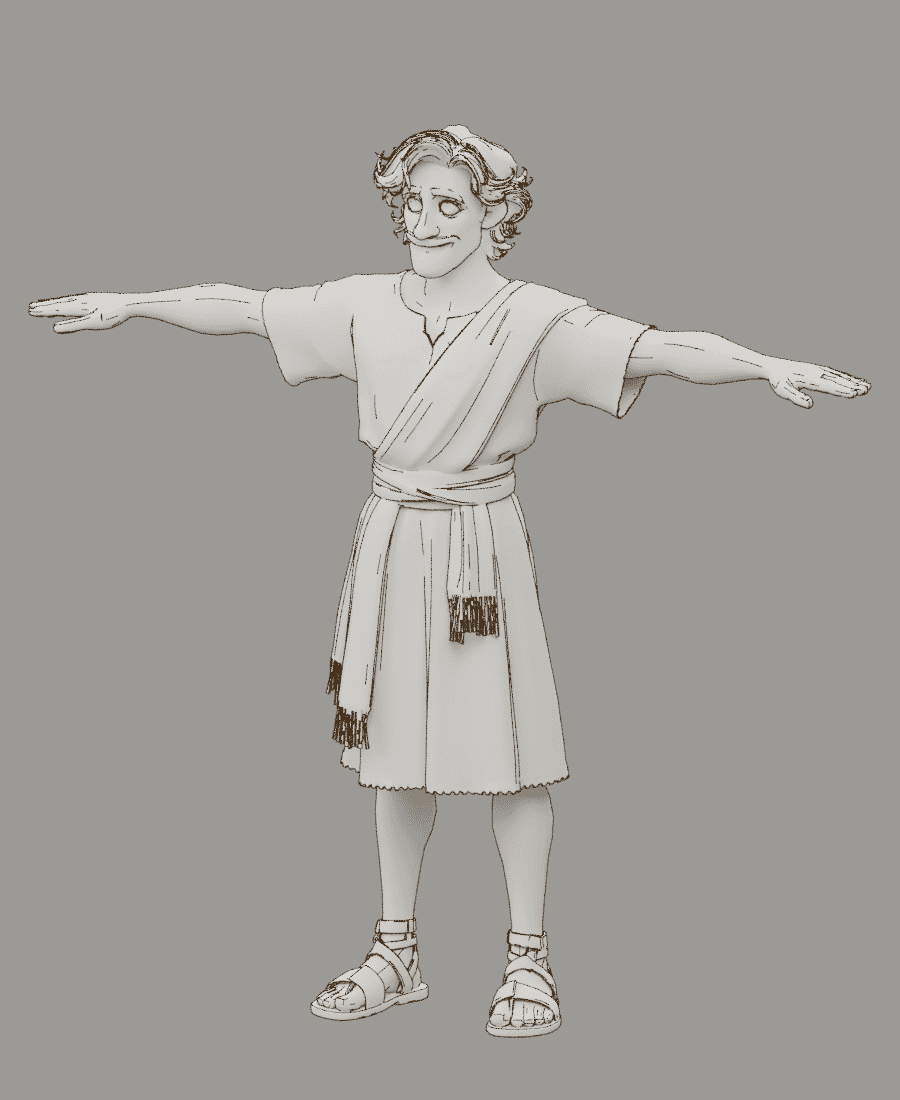
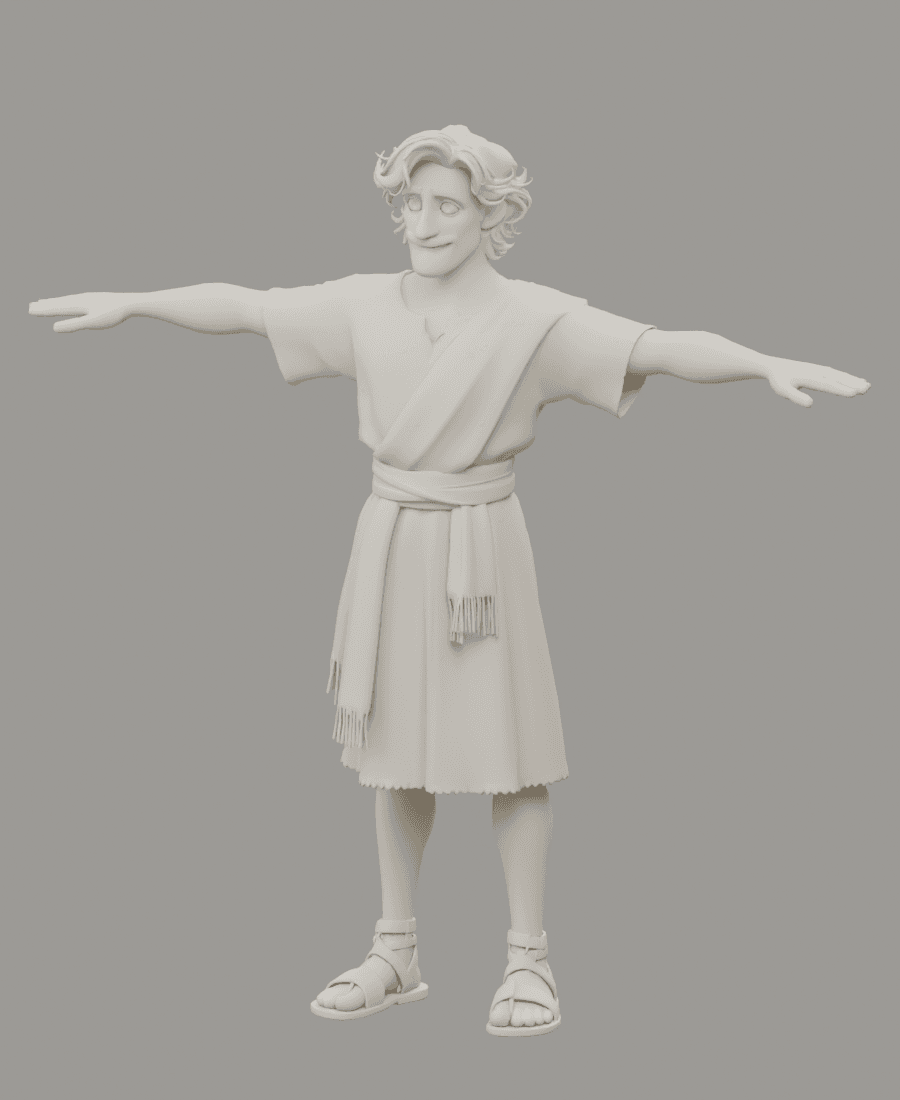
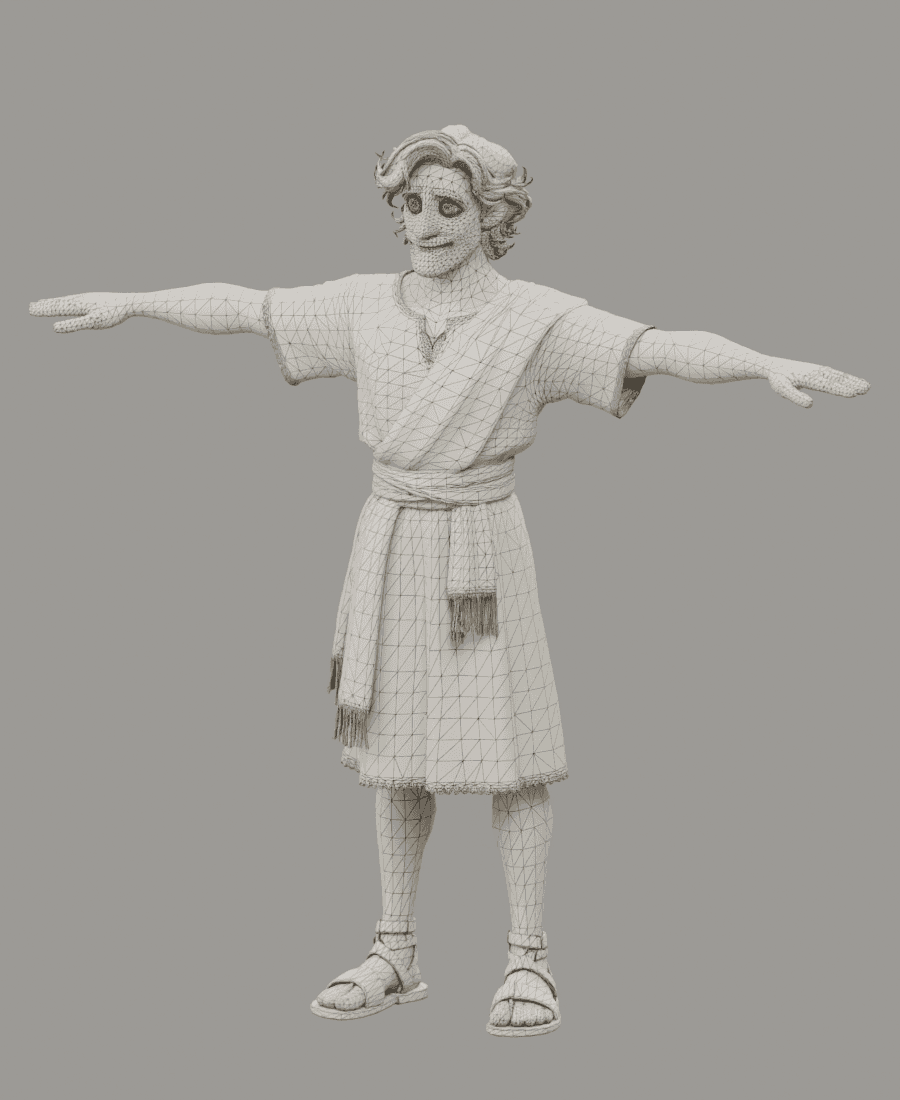
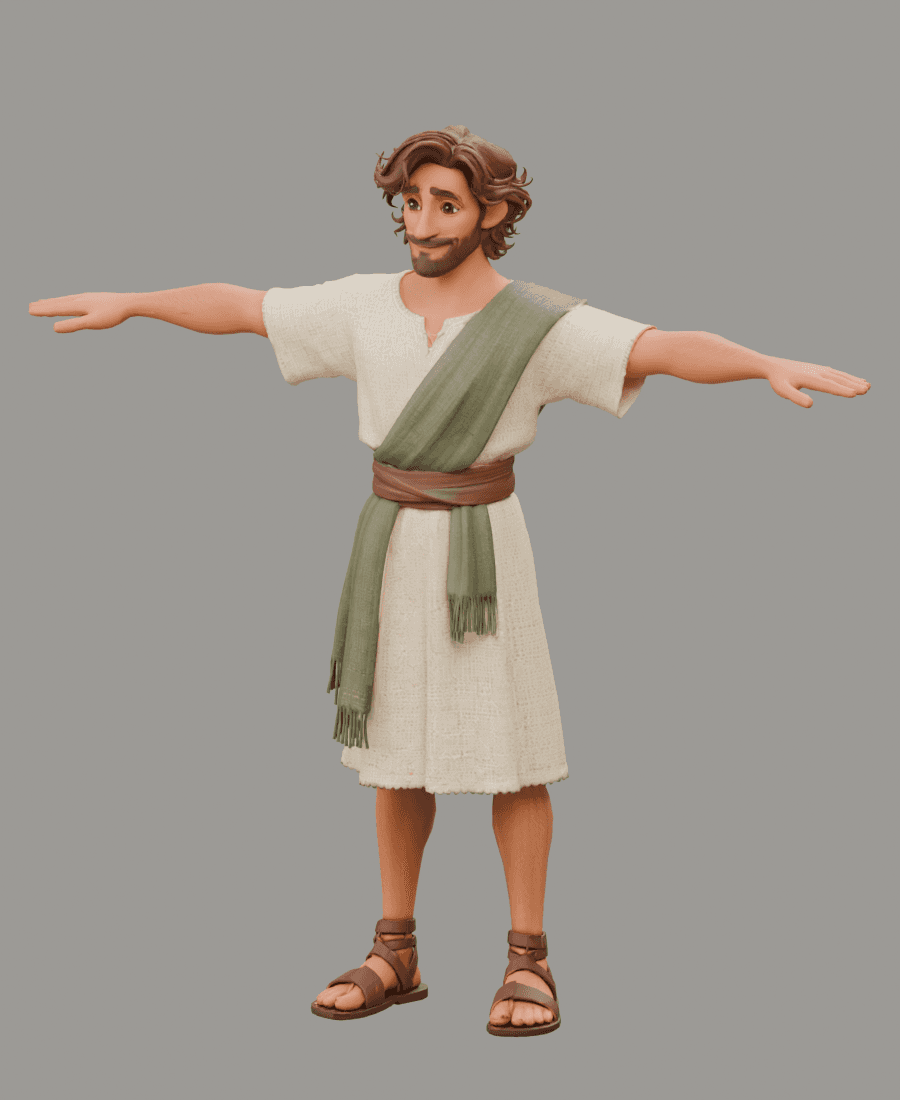
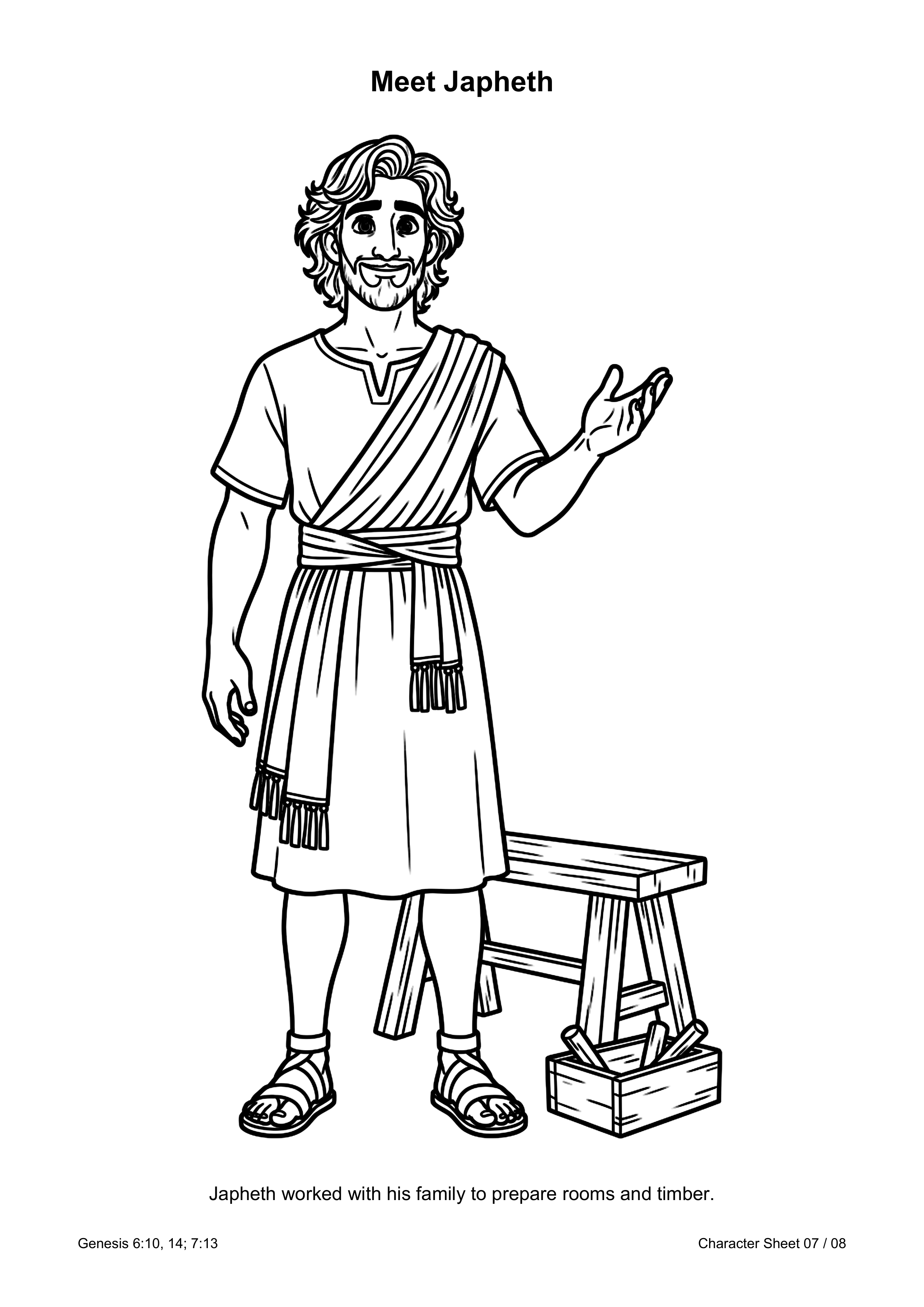
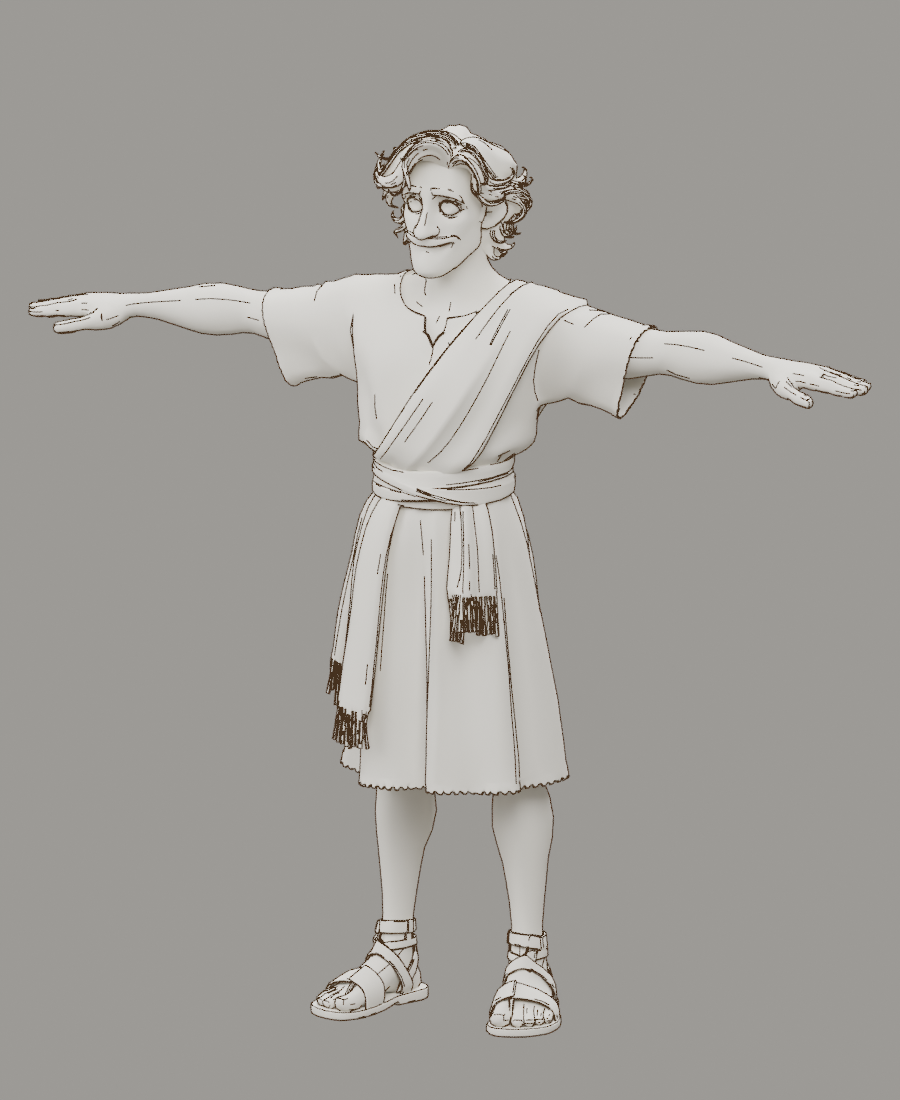
These line, clay and mesh studies are new visualizations of the project model. They explain its construction; they are not historical sketches or captures of the original production stages.
A character with a purpose
Use a recognizable profile and an open visual rhythm to distinguish Japheth. Keep the proportions and surface language connected to the family while allowing a different personality to emerge through performance.
Character concept
A character begins with a clear visual question: what should the player understand at a glance? Line studies isolate gesture, proportion and silhouette, making the design readable before lighting or surface detail carries the image. The supplied production assets began with reference art and generated base meshes, followed by Blender fitting and surface repairs.
The line study considers Japheth’s profile and the openness of his pose, identifying a visual rhythm that differs from his brothers’ designs.
Form and volume
The clay view removes colour and texture to reveal the shape underneath. Faces, folds and broad proportions can be examined together, showing how large forms support smaller details without depending on the finished material treatment.
Clay makes the head, torso and garment volumes easier to compare, showing whether the individual outline remains clear without textured detail.
Mesh and topology
The mesh view exposes the geometry that holds the visible surface together. It gives a practical way to inspect the distribution of shapes around the face, garments and limbs; a mesh view alone does not certify animation readiness.
Inspect the supplied structure across the profile, shoulders and limbs, connecting the visible silhouette with the geometry that creates it.
Materials and surfaces
Colour, texture and the response to light turn a modelled form into a recognizable presence. The shaded view lets you inspect the actual supplied surfaces, while the clay view makes it easier to separate material effects from geometry.
His textured surfaces provide another layer of recognition while remaining part of the family’s common material and lighting vocabulary.
Movement and game design
The textured and clay views show a gentle idle animation. The mesh view shows the same resting pose.
The intended performance explores open posture and responsive gestures, giving Japheth a distinct presence while keeping unrecorded reactions clearly within the adaptation.
- Triangles
- 58,378
- Vertices
- 62,790
- Model size
- 6.8 MB